








Demystifying the Data Centre
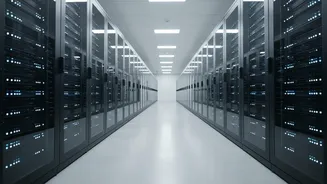
Before diving into the massive numbers, it’s helpful to understand what a data centre is. Think of it as the engine room of the internet. It's a secure, dedicated building that houses thousands of computer servers, storage systems, and networking equipment.
These facilities are the physical backbone of everything we do online, from streaming movies and video conferencing to cloud computing and online shopping. When you upload a photo, access a cloud document, or use a mobile app, the data is processed and stored in one of these centres. Spending on these systems includes servers, storage, and the networking gear that makes them all work together. It’s a direct measure of how much capacity the world is building to handle our ever-growing appetite for digital services.
The AI Gold Rush
The single biggest catalyst for this spending boom is the rapid global adoption of artificial intelligence. Generative AI models and other AI workloads are incredibly power-hungry and require specialised, high-performance servers. According to Gartner, building the computing capacity for AI is “the largest infrastructure project ever attempted by humanity”. Companies, from giant hyperscale cloud providers to large enterprises, are in an arms race to build out infrastructure that can handle these demanding tasks. This isn't just about buying more servers; it's about investing in new types of AI-optimised hardware, which are more expensive and complex. This AI-driven demand is causing a massive 62.5% year-over-year jump in data centre system spending projected for 2026, making it the fastest-growing segment in all of IT spending.
Beyond AI: Cloud and Connectivity
While AI is the headline act, other powerful trends are also contributing to the surge. The ongoing migration of businesses to the cloud continues to fuel demand for Infrastructure as a Service (IaaS), which is the second-fastest growing spending segment. Companies are ditching their on-premise servers and moving their operations to cloud platforms offered by providers like Amazon Web Services, Microsoft Azure, and Google Cloud, who in turn must constantly expand their data centre footprints to meet this demand. Furthermore, the general digitisation of the economy—accelerated in recent years—means more data is being created, processed, and stored than ever before. This creates a compounding effect where more digital activity requires more data centre capacity, and the arrival of mainstream AI simply puts this trend into hyperdrive.
India’s Digital Infrastructure Boom
This global trend has a distinct and powerful echo in India. The country is currently experiencing a rapid data centre expansion phase of its own, driven by a similar mix of cloud migration, enterprise digitisation, and the burgeoning AI ecosystem. According to recent industry reports, India's data centre capacity is projected to more than double between 2023 and 2026. In the first half of 2026 alone, the country added 258 MW of new capacity, a 59% increase from the same period last year. While India currently accounts for a small fraction of the global market, its share is expected to grow significantly as demand from one of the world's largest digital populations continues to climb. Major hubs like Mumbai, Chennai, and Bengaluru are seeing massive investments, with new locations also emerging to meet the critical need for land and power.