






The Monsoon’s Critical Role
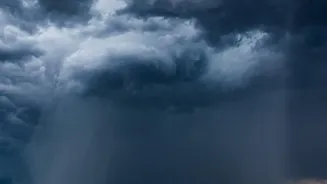
The Southwest monsoon, which occurs from roughly June to September, is the single most important feature of India's climate. It provides over 70% of the country's total annual rainfall. This isn't just a weather statistic; it's the foundation of the nation's
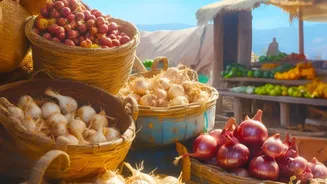
agricultural sector and, by extension, its economic stability. Nearly half of India's farmland lacks irrigation, making these seasonal rains essential for cultivating key crops like rice, cotton, and soybeans. The monsoon replenishes everything from massive reservoirs that supply drinking water and power to the groundwater that sustains millions. A strong monsoon means a bountiful harvest and a healthy economy, while a weak one can spell widespread distress for farmers and push up food prices for everyone.
What Exactly Is El Niño?
Thousands of kilometers away in the tropical Pacific Ocean, a natural and cyclical climate pattern called the El Niño-Southern Oscillation (ENSO) unfolds. This cycle has two main opposite phases: El Niño and La Niña. The term El Niño, Spanish for 'The Little Boy', refers to the unusual warming of the sea surface temperatures in the central and eastern Pacific Ocean. This warming, which happens every three to seven years on average, might seem remote, but it's powerful enough to disrupt weather patterns across the globe, including the Indian monsoon. La Niña, or 'The Little Girl', is the opposite phase, characterized by a cooling of those same ocean waters.
The Link: How a Warm Pacific Weakens the Monsoon
The connection between El Niño and the Indian monsoon lies in the atmosphere. Normally, strong trade winds blow from east to west across the Pacific, pushing warm surface water towards Asia. This helps maintain a system of air circulation that supports the monsoon winds flowing from the Indian Ocean onto the subcontinent. During an El Niño event, these trade winds weaken or even reverse. The pool of warm water, which typically sits in the western Pacific, shifts eastward. This alters the large-scale atmospheric circulation patterns. For India, this disruption generally weakens the monsoon winds, reduces their moisture-carrying capacity, and leads to suppressed rainfall across the subcontinent. In simple terms, a warmer eastern Pacific often means a drier monsoon season for India.
A Pattern of Disruption
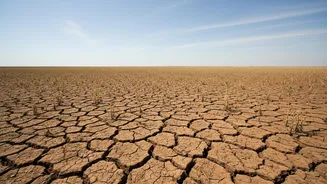
History shows a strong, though not perfect, correlation between El Niño years and deficient monsoons in India. Many of India’s most significant droughts have occurred during El Niño events. This recurring pattern makes El Niño one of the most-watched indicators for long-range monsoon forecasting. However, the relationship is complex. Not every El Niño year results in a drought. For example, the powerful 1997-98 El Niño event was famously associated with a normal monsoon in India, surprising forecasters and highlighting that other factors are also at play. But the general tendency remains: El Niño significantly increases the probability of a below-average monsoon.
More Than Just El Niño
While El Niño is a major player, it isn't the only one influencing the monsoon. Another important factor is the Indian Ocean Dipole (IOD), sometimes called the 'Indian Niño'. The IOD is an oscillation of sea surface temperatures in the Indian Ocean itself. A 'positive' IOD phase, with warmer waters in the western Indian Ocean and cooler waters in the east, can help counteract the negative effects of El Niño and bring good rains to India. Conversely, a 'negative' IOD can worsen a weak monsoon. The interplay between ENSO and the IOD is a key area of research for meteorologists, as their combined effect often determines the final outcome of the monsoon season.
The Other Side of the Coin: La Niña
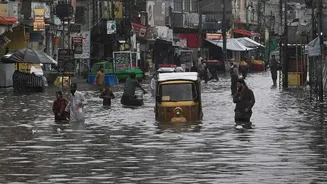
Just as El Niño tends to suppress rainfall, its counterpart, La Niña, often has the opposite effect. During La Niña, the trade winds over the Pacific are stronger than usual, pushing more warm water towards Asia and intensifying the atmospheric circulation that favors a strong Indian monsoon. Consequently, La Niña years are often associated with above-average rainfall, and sometimes even flooding, across the Indian subcontinent. This makes the ENSO cycle a crucial pendulum swinging between two extremes, with massive implications for India's water security and agricultural fortunes each year.