

The Foundation: A Flaky, Crisp Crust
The journey to a perfect lemon meringue pie begins with its base. A soggy bottom is the baker's nemesis, and the key to avoiding it is a well-made, properly baked pastry shell. Most classic recipes call for a shortcrust pastry, celebrated for its rich,
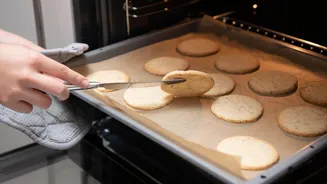
buttery flavour and crumbly texture. The magic happens when cold butter is worked into flour. As the pie bakes, the cold butter creates pockets of steam, resulting in a light, flaky texture. To guarantee a crisp finish that can stand up to the moist filling, blind baking is non-negotiable. This process involves pre-baking the empty pie crust, often weighed down with pie weights or dried beans, until it's a pale golden colour. This step creates a sealed, sturdy vessel, ensuring every slice has that satisfying crunch from the first bite to the last.
The Heart: A Lusciously Tangy Lemon Filling
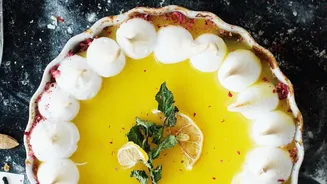
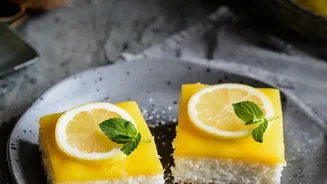
At the core of the pie is the vibrant lemon filling, a rich curd that must strike a delicate balance between tart and sweet. The goal is a texture that is firm enough to slice cleanly but still melts in your mouth. This is typically achieved by cooking a mixture of fresh lemon juice, sugar, egg yolks, and a thickener like cornstarch on the stovetop. Using fresh lemon juice is crucial; bottled juice simply cannot replicate the bright, zesty flavour. The egg yolks contribute richness and colour, while the cornstarch provides the necessary structure. Some bakers even add a small amount of gelatin for extra stability, ensuring the filling holds its shape beautifully. The process requires constant whisking over low heat to prevent the eggs from scrambling, resulting in a smooth, glossy curd that is the delicious heart of the pie.
The Crown: A Cloud of Fluffy Meringue
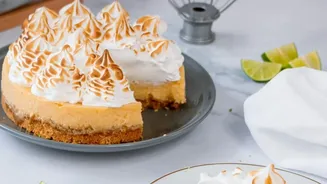
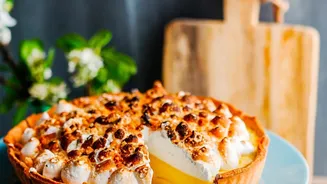
The pie's glorious crown is its meringue, a seemingly simple mixture of egg whites and sugar that can be deceptively tricky. There are three main types: French, Swiss, and Italian. While French meringue is the simplest (whipping raw egg whites with sugar), Swiss and Italian meringues are cooked, making them far more stable and ideal for pie toppings. Swiss meringue involves gently heating egg whites and sugar over a water bath before whipping, while Italian meringue involves pouring a hot sugar syrup into already whipping egg whites. Both methods create a dense, marshmallow-like meringue that is less likely to 'weep' or shrink. For a perfect finish, it's essential to spread the meringue so that it completely covers the filling and touches the crust on all sides. This 'seal' prevents the meringue from pulling away during baking and helps create the pie's signature golden-brown peaks.
The Art of Assembly
Bringing the three components together is the final, crucial step. A common debate among bakers is whether the filling should be hot or cold when the meringue is applied. Many experts recommend spooning the meringue onto a hot filling. The heat from the filling helps to cook the bottom layer of the meringue, creating a better seal and reducing the risk of a watery layer forming between the two. After topping with meringue, the pie is returned to the oven for a short time until the peaks are beautifully browned. Once baked, the pie must be allowed to cool completely at room temperature before being refrigerated. This patient cooling process is vital for allowing the filling to set properly, ensuring that when you finally slice into it, you are met with clean, distinct layers of crisp pastry, tangy curd, and airy meringue.