


A Glimpse into the Distant Past
Scientists have pointed the powerful instruments of the James Webb Space Telescope (JWST) toward a galaxy known as J0148-4214. This isn't just any galaxy; its light has travelled for over 12.5 billion years to reach us, meaning we are seeing it as it was
just 1.2 billion years after the Big Bang. Observing such distant objects is like using a time machine, offering a window into the universe’s chaotic youth. Initial observations suggested it was a fairly standard, if distant, galaxy with a single supermassive black hole at its core. However, new, more detailed analysis has completely changed that picture, revealing a far more complex and crowded environment. This discovery helps tackle a major puzzle in astronomy: how supermassive black holes grew to be so enormous so early in the universe's history.
Seeing Double, and then Triple
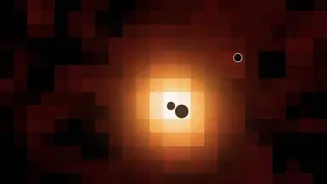
The latest findings are startling. Instead of one, astronomers have found evidence for three actively feeding black holes within J0148-4214. It is the first time a trio of active black holes has been confirmed in a single galaxy so early in cosmic history. Two of these behemoths are located incredibly close to each other in the galactic centre, separated by a mere 190 parsecs, or about 620 light-years. To put that in perspective, it is an astonishingly small distance on a galactic scale. The third black hole lurks further out, about 5,500 light-years from the crowded core. The telescope couldn't see the black holes directly; instead, its Near-Infrared Spectrograph (NIRSpec) detected their tell-tale signatures by measuring the motion of superheated gas swirling around them at extreme speeds.
The Cosmic Engine of an Active Black Hole
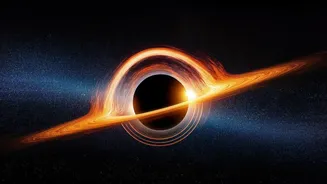
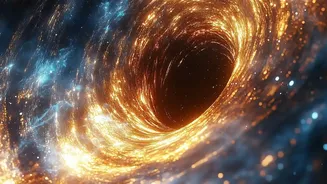
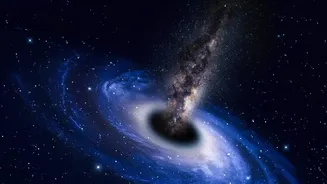
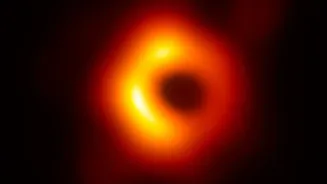
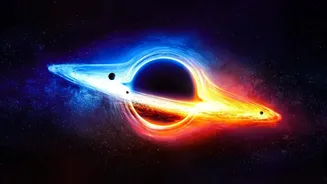
So, what exactly is an 'active' black hole? Most large galaxies, including our own Milky Way, have a supermassive black hole at their center, a gravitational anchor holding things together. Most of the time, these giants are dormant. But when a black hole is actively pulling in large amounts of surrounding gas and dust, this material forms a spinning, superheated structure called an accretion disk. This process releases immense amounts of energy, causing the region to shine brighter than all the stars in the galaxy combined. Finding multiple active black holes in one system suggests a turbulent environment, likely the result of recent or ongoing galaxy mergers, where there is plenty of cosmic gas and dust to fuel their growth.
Solving the Mystery of Black Hole Growth
This discovery provides a crucial clue to a long-standing astronomical mystery. Scientists have been puzzled by how black holes in the early universe managed to accumulate billions of solar masses so quickly. One theory is that they grew by steadily consuming gas, but that process might be too slow. The scene in J0148-4214 offers powerful evidence for another, faster route: galactic mergers. When galaxies collide, their central black holes are brought together. This trio represents a snapshot of that process. The two central black holes are on a collision course, predicted to merge in a few hundred million years. Such mergers are one of the most violent events in the universe, releasing enormous energy in the form of gravitational waves.
The Unparalleled Power of Webb
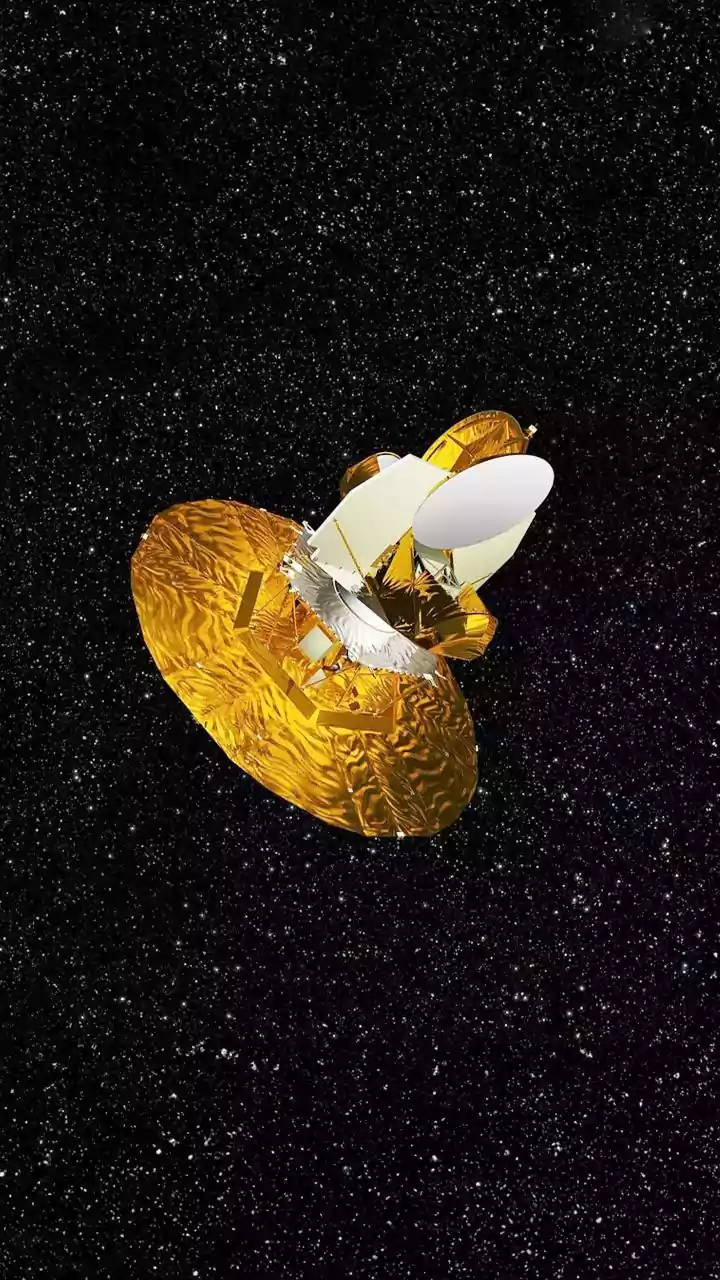
Detecting these crowded black holes would have been impossible before the James Webb Space Telescope. Its incredible sensitivity and high-resolution spectroscopic instruments, like NIRSpec, allow astronomers to not only detect the faint light from these ancient galaxies but also to map the movement of gas within them. This ability to spatially resolve different regions of a distant galaxy is what allowed scientists to distinguish the signatures of the two closely packed central black holes from each other. Previous telescopes would have seen this system as a single, blurry point of light. The discovery highlights how this new generation of space-based observatories is revolutionizing our understanding of the universe's formation and evolution.