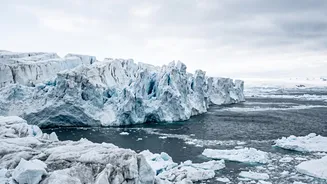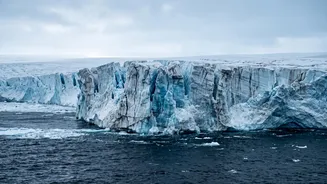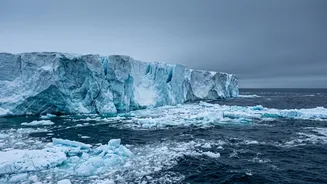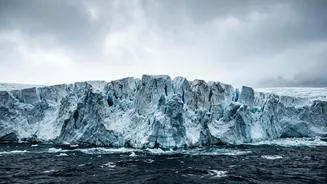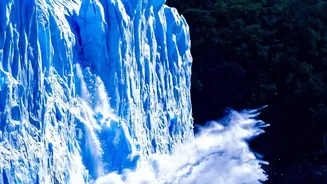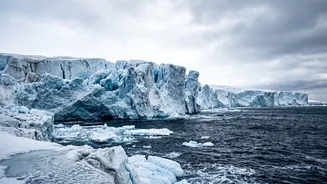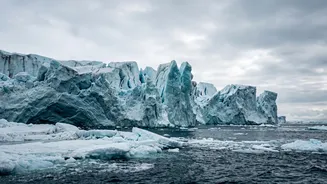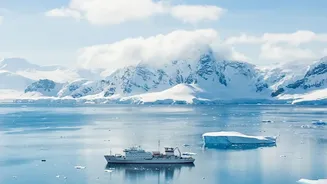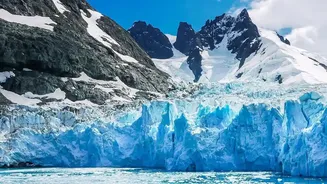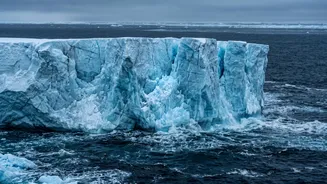




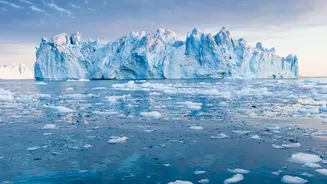
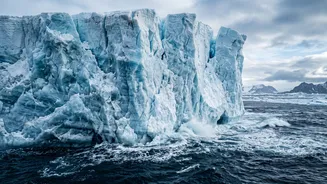
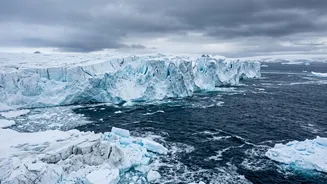
It’s nicknamed the 'Doomsday Glacier' for a reason. Now, new scientific models are providing a frighteningly detailed picture of how warmer ocean water is finding its way beneath Antarctica's massive Thwaites Glacier, speeding up its demise.
The Glacier at the End of the World
Thwaites Glacier,
located in one of the most remote parts of West Antarctica, is a colossal river of ice, roughly the size of the state of Gujarat. It already contributes around 4% of annual global sea-level rise. Scientists are intensely focused on it not just for what it's losing now, but for what it holds back. Thwaites acts like a cork, plugging the much larger West Antarctic Ice Sheet. If it were to collapse entirely, it could raise sea levels by over two feet on its own, but its failure could destabilize the entire sheet, leading to a catastrophic rise of up to 10 feet. This potential has earned it the ominous title of the 'Doomsday Glacier'.
A Newly Understood Threat
The central worry has always been that warm, dense ocean water is melting Thwaites from below. Recent studies have dramatically sharpened this concern. Using new, sophisticated computer models, researchers from institutions like the University of California, Irvine, and NASA's Jet Propulsion Laboratory have found that previous projections may have significantly underestimated the threat. The new models suggest that Thwaites' contribution to sea-level rise by the year 2100 could be double what was previously estimated, even with no further increase in climate warming. This alarming revision is based on a better understanding of a crucial, hidden process.
Mapping an Unseen Pathway
The key discovery lies in the 'grounding zone'—the area where the glacier lifts off the seabed and begins to float. Older models treated this as a simple, fixed line. However, new satellite data and simulations show this is a wide, dynamic zone, sometimes several kilometres across, where seawater regularly pushes deep inland beneath the grounded ice. Tidal cycles act like a pump, flushing this zone with warmer, saltier, and denser ocean water. This water doesn't just melt the ice; it actively weakens the glacier's connection to underwater ridges that act as natural anchors, holding it in place. By incorporating this 'grounding zone' dynamic, the new models were able to match the glacier's actual observed retreat and thinning four times more closely than previous models.
Why Antarctica's Fate Matters for India
A melting glacier thousands of kilometres away may seem like a distant problem, but its consequences are global and direct. For India, with its 7,500-kilometre coastline and densely populated coastal cities like Mumbai, Chennai, and Kolkata, the projections are a stark warning. The potential sea-level rise from Thwaites' collapse alone would dramatically increase the risk of coastal flooding, erosion, and storm-surge damage. But the larger issue is the destabilization of the entire West Antarctic Ice Sheet, which Thwaites holds in check. A rise of several feet would be devastating, displacing millions and putting trillions of dollars of infrastructure at risk. The fate of this one glacier is a critical variable in India's future climate resilience planning.