




A New Window on the Cosmos
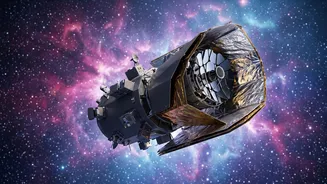
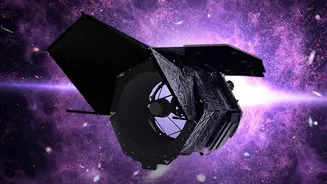
NASA has given the green light for the next phase of development for a new space telescope designed to explore the universe's history in a way no other observatory can. The Probe far-Infrared Mission for Astrophysics, or PRIMA, is the first of a new class
of 'Probe Explorer' missions and is projected to launch no earlier than 2033 for a five-year mission. Managed by NASA's Jet Propulsion Laboratory, PRIMA will be a collaborative effort with international partners including the space agencies of Germany, Canada, and the UK. The mission's goal is to unveil the parts of the universe hidden from view, helping us better understand the formation of everything from planets and stars to the origins of water on Earth.
The Far-Infrared Gap
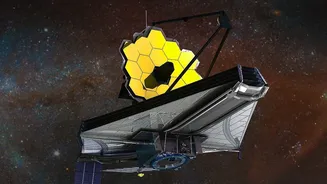
Our current generation of powerful telescopes, like the James Webb Space Telescope (JWST) and the ground-based Atacama Large Millimeter/submillimeter Array (ALMA), are revolutionary. However, they leave a significant blind spot in our vision. JWST is a master of the near- and mid-infrared, while ALMA excels at longer radio waves. Between them lies the 'far-infrared gap', a range of light that is crucial for understanding the cooler parts of the universe. Far-infrared light is emitted by cold dust and gas, the very building blocks of stars and planets. Much of this cosmic activity is obscured by dust clouds that visible and even near-infrared light cannot penetrate. PRIMA is specifically designed to peer into this hidden realm, bridging the gap between Webb and ALMA to give us a more complete picture.
The Science of Cold and Dusty
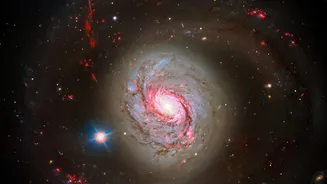
By observing in the far-infrared, PRIMA will tackle some of the biggest questions in modern astrophysics. Its three primary science themes are tracing the chemical signatures of planet formation, understanding the co-evolution of galaxies and their central supermassive black holes, and measuring how cosmic dust and heavy elements have built up over time. This will allow scientists to investigate the role of water in the formation of new worlds, a question Webb cannot fully answer because the necessary spectral lines are only visible in the far-infrared. PRIMA will also be able to study galactic outflows—vast streams of gas ejected from galaxies—which play a key role in their evolution. Previous missions could only study these in a handful of nearby galaxies; PRIMA will be able to map them in thousands.
Technology for a Cold Universe
To see the faint, cold universe, the telescope itself must be incredibly cold. PRIMA will feature a 1.8-meter (5.9-foot) primary mirror that is cryogenically cooled to just 4.5 Kelvin (around minus 268 degrees Celsius). This extreme cold prevents the telescope's own heat from overwhelming the faint infrared light from distant galaxies—a limitation faced by past far-infrared missions like Herschel and Spitzer. PRIMA will carry two main instruments: the PRIMA Imager (PRIMAger) and the Far Infrared Enhanced Survey Spectrometer (FIRESS). These instruments use new, highly sensitive detectors that, combined with the cold telescope, will make PRIMA orders of magnitude more sensitive than its predecessors, producing images with unprecedented sharpness.
The Road to 2033
PRIMA has now officially entered Phase B of its development, which focuses on advancing the preliminary design and technology. This is a critical stage where the mission's plans, schedule, and costs are scrutinized. Before it can move to full-scale implementation (Phase C), PRIMA must pass a confirmation review that assesses its technical feasibility and programmatic performance. If it clears this hurdle, the project's cost is capped at approximately $1.2 billion, not including the launch vehicle. With a target launch date of 2033, the observatory represents a key part of NASA's strategy to maintain a steady cadence of major scientific missions, ensuring a constant flow of discovery for decades to come.