



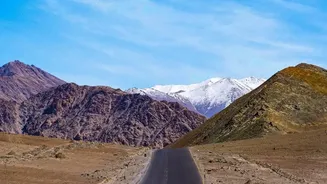


A Gateway in the Clouds
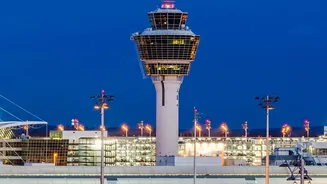
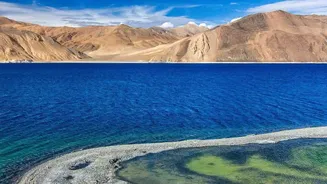
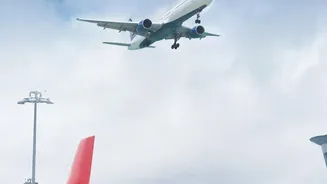
Kushok Bakula Rinpoche Airport, located in Leh, is India's highest commercial airport, sitting at a breathtaking altitude of 3,256 metres (10,682 feet). This incredible height makes it one of the highest commercial airports globally, presenting unique
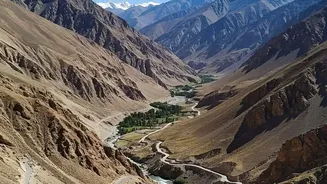
challenges for pilots and aircraft. The thin air reduces engine efficiency and lift, requiring specially trained pilots and limiting operations primarily to the calm morning hours before mountain winds pick up. Beyond its technical marvels, the airport serves as a vital year-round lifeline for Ladakh, connecting the remote region to the rest of India, especially when winter snows block road access. The approach to the runway, weaving through stunning Himalayan peaks, is considered one of the most scenic in the world.
The Man Behind the Name
The airport is named in honour of the 19th Kushok Bakula Rinpoche (1918-2003), a figure of immense importance to Ladakh and India. Born into a royal family in Ladakh, he was recognised as a child by the 13th Dalai Lama as the reincarnation of Bakula Arhat, one of the original sixteen disciples of Gautama Buddha. He undertook rigorous monastic studies in Tibet, earning the highest degree of Geshe Lharampa. However, his life was not confined to spiritual pursuits. He was a rare combination of monk, scholar, and statesman who dedicated his life to public service.
The Architect of Modern Ladakh
Hailed as the 'Architect of Modern Ladakh', Rinpoche's influence on the region's development was profound. At the behest of Prime Minister Jawaharlal Nehru, he entered politics in 1949, serving as a minister in the Jammu and Kashmir government and later as a multi-term Member of Parliament in the Lok Sabha. He was a tireless advocate for the rights and welfare of Ladakhis and other marginalised communities, championing education, social reforms, and the preservation of Ladakh's unique cultural identity. He firmly integrated Ladakh with the rest of the nation, famously stating during a period of political uncertainty that Ladakh would always remain with India.
A Monk's Diplomatic Mission
Perhaps the most unique chapter of his life began in 1990, when he was appointed India's ambassador to Mongolia, a role he held for a decade. This made him one of the world's only monk-ambassadors. He arrived in Mongolia during a pivotal moment, as the country was transitioning away from decades of communist rule that had suppressed religious freedom. Rinpoche played an instrumental role in the revival of Buddhism in Mongolia, overseeing the rebuilding of monasteries and re-establishing spiritual education. His efforts were so impactful that Mongolians affectionately called him 'Elchin Bagsh' or 'Ambassador Teacher', and his work is credited with helping ensure the country's peaceful transition to democracy.
More Than Just an Airport
Naming India's highest airport after Kushok Bakula Rinpoche is a fitting tribute to a man who spent his life connecting people and bridging worlds. Just as the airport physically connects Ladakh to the outside world, Rinpoche spiritually and politically connected his remote homeland to the national and global stage. He was awarded the Padma Bhushan in 1988 for his immense contributions. The airport, therefore, stands not just as a feat of engineering, but as a powerful symbol of Ladakh's identity, its strategic importance, and the enduring legacy of a visionary leader who helped his people navigate the complexities of the 20th century while remaining true to their ancient heritage.