








From Generic to Granular
For decades, the IT services model was built on a foundation of versatile, horizontal solutions that could be adapted for clients in any industry. However, TCS now sees a burgeoning demand for a more specialised approach. This involves developing sophisticated
AI, data, and business process models tailored to the unique operational realities of specific sectors, such as banking, manufacturing, or healthcare. Instead of a generic toolkit, clients are now asking for precision instruments. Think of it as the difference between a general practitioner and a cardiac surgeon; while both are doctors, the latter is needed for a complex heart operation. This shift signifies a maturation of the market where clients demand partners with deep domain expertise who understand their business processes intimately, not just their technology infrastructure.
The AI-Driven Catalyst
The primary driver behind this trend is the rapid advancement and adoption of artificial intelligence, particularly generative AI. As companies move from experimenting with AI to deploying it at scale, they are discovering that the real value lies in its application to core business challenges. A generic AI chatbot is useful, but an AI agent trained on a specific company's supply chain data to predict disruptions in real-time is revolutionary. TCS is investing heavily in this area, training over half a million associates in AI and machine learning and creating platforms like TCS AI WisdomNext. The company is positioning itself as an 'Enterprise Intelligence Integrator', helping clients infuse AI into the very fabric of their operations and build custom AI models for specific enterprise and sovereign needs.
TCS's Strategic Response
In response to this growing need, TCS is actively reorganising its business and forging key partnerships. The company has created dedicated business units to focus on industry-specific solutions and enterprise business operations. For example, their TCS Crystallus offering provides pre-configured, industry-specific solutions for platforms like SAP, aiming to accelerate digital transformation. Furthermore, TCS has partnered with leading AI firms like Anthropic and Mistral AI to co-develop solutions for sectors including BFSI, healthcare, and manufacturing. This strategy allows TCS to combine its deep contextual knowledge of client industries with cutting-edge AI technology, creating a powerful value proposition. The goal is to move beyond being just an execution provider and become a holistic transformation partner.
Real-World Impact Across Industries
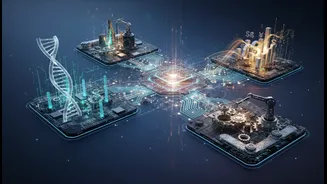
This specialised approach manifests differently across sectors. In manufacturing, it could mean generative AI models that reimagine the supply chain or optimise plant operations. For a bank or financial services firm, it might involve building a digital twin of its capital markets processes to reduce risk or creating predictive models for liquidity needs. For a retail client, AI agents can be deployed to cut claim settlement times or orchestrate IT operations to reduce incidents. The core idea is consistent: leveraging deep industry knowledge to apply technology in a way that delivers measurable business outcomes, whether that’s increased efficiency, new revenue streams, or enhanced customer experience. This move shows that enterprises are no longer buying standalone AI projects but are instead investing in comprehensive, AI-led operational transformations.
The Future of IT Services
This pivot by an industry bellwether like TCS indicates a broader evolution in the IT services sector. The future belongs to firms that can combine technological prowess with deep, vertical-specific expertise. Clients are no longer just buying code; they are buying outcomes. This requires a new kind of talent—engineers and consultants who are 'AI-native' and possess deep domain knowledge. While some have worried that AI could diminish the role of large IT integrators, TCS argues the opposite. They see an expanded role in helping clients navigate a complex landscape of multiple AI models and integrating them into legacy systems, a task that requires significant scale and expertise. This shift represents a move up the value chain, from outsourcing and maintenance to strategic partnership and business model reinvention.