








Why AI is So Thirsty
The magic of generative AI, from ChatGPT to Gemini, happens inside data centres packed with thousands of powerful servers. These servers, particularly the graphics processing units (GPUs) that are essential for AI workloads, generate an immense amount
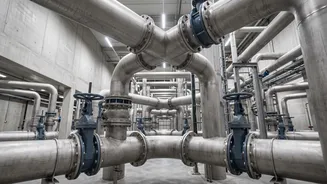
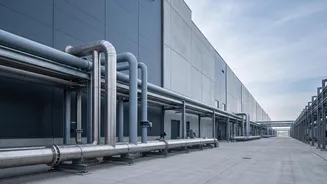
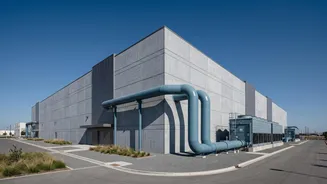
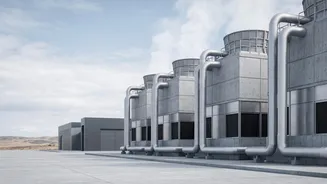
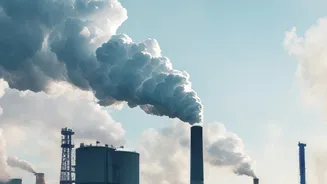
of heat. To prevent them from overheating and failing, data centres require constant cooling. While several methods exist, one of the most common and cost-effective is evaporative cooling, which uses water. Huge cooling towers evaporate water to dissipate heat, much like how sweating cools the human body. The more complex the AI model and the more queries it handles, the harder the servers work, the more heat they produce, and the more water they consume to stay cool.
Putting the Numbers in Perspective
The scale of this water consumption is staggering. Training a single large language model like GPT-3 was estimated to consume 700,000 litres of fresh water. On a daily basis, a simple conversation of 10 to 50 queries with a chatbot can use up a 500ml bottle of water. Globally, tech giants report enormous water usage. In 2022, Microsoft's water consumption grew by 34% to 6.4 million cubic metres, while Google's increased by 20% to 19.5 million cubic metres, primarily for their data centres. Projections suggest that by 2027, global AI demand could require between 4.2 and 6.6 billion cubic metres of water annually, which is more than half of the United Kingdom's total annual water withdrawal.
India's AI Ambition Meets Water Reality
As India positions itself as a global AI leader, with the government's IndiaAI Mission and massive private investment, the demand for data centres is exploding. The country's data centre capacity is projected to expand dramatically by 2030. This growth, however, comes with a significant water bill. In 2024-25, India's data centres were estimated to use around 150 billion litres of water, a figure expected to more than double by 2030. Critically, many of these data centres are concentrated in cities like Bengaluru, Mumbai, and Chennai, which have already faced severe water stress. For example, a single large data centre can consume about 1.4 to 2 million litres of water per day, equivalent to the daily needs of thousands of urban households, creating a direct conflict over a scarce resource.
The Challenge of Transparency and Regulation
A major hurdle in addressing this issue is a lack of transparency. While some companies like Google and Microsoft have started releasing global water usage data, detailed information for individual facilities is often unavailable. In India, a significant challenge is that state-level data centre policies currently do not mandate the disclosure of water consumption, making it difficult to monitor and regulate the sector's true impact. This information gap prevents effective planning and accountability, especially as more data centres are being built in regions already grappling with water scarcity. The issue isn't just about the quantity of water used, but also the quality; the discharged water can be warmer and have higher concentrations of minerals, potentially impacting local ecosystems.
Searching for Sustainable Solutions
The tech industry is aware of the problem and is exploring a range of solutions to curb its water use. Innovations in cooling technology are at the forefront. Direct liquid cooling, where fluids are used to absorb heat directly from server components, is far more efficient than air-based systems. Another advanced method is immersion cooling, where servers are fully submerged in a non-conductive fluid. Companies are also pledging to become "water positive" by 2030, meaning they aim to replenish more freshwater than they consume through investments in water restoration projects. Other strategies include using non-potable sources like recycled water for cooling and designing new data centres that use no water for cooling under normal operating conditions.