



The Puzzle of the Missing Minis
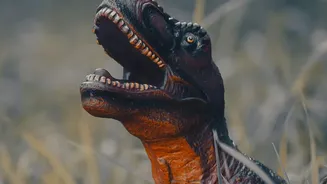
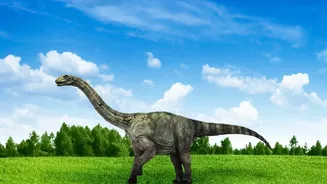
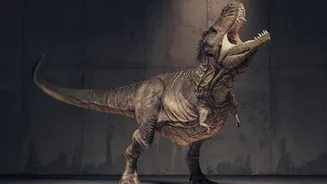
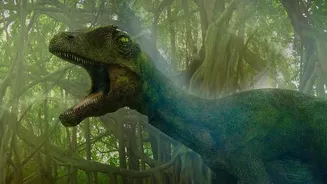
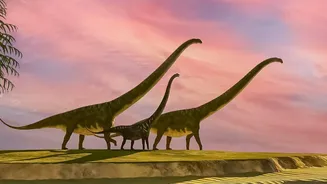
For over 170 million years, dinosaurs dominated almost every corner of the Earth, evolving into a spectacular range of shapes and sizes. We know about the titans like Argentinosaurus, which stretched over 30 meters long, and fearsome predators like T-Rex.
Yet, for decades, palaeontologists have been baffled by a curious gap in the fossil record. While ecosystems are typically dominated by smaller species, there's a distinct lack of genuinely tiny non-avian dinosaurs. The smallest known species weighed around 400-450 grams, roughly the size of a large rabbit. This is hundreds of times heavier than the smallest mammals, birds, and reptiles we see today, like the 1.8-gram Etruscan shrew. Some wondered if we just hadn't found the fossils, but this seemed unlikely. Fossil sites that are exceptionally good at preserving delicate, small animals still turn up plenty of tiny mammals and lizards, but no comparably-sized dinosaurs. The gap was real, and it needed an explanation.
A New Theory: The Mammal Blockade
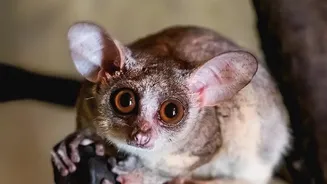
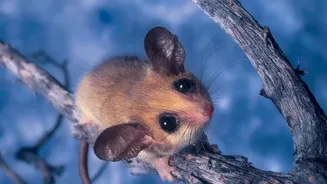
A recent study published in the journal Evolution offers a compelling new answer: it wasn't a failure of dinosaur biology, but a success of mammal ecology. Researchers from Princeton University and the American Museum of Natural History used mathematical models to test what controlled animal body size. These models, based on how animals convert food energy into offspring, worked well for predicting the size ranges of modern mammals and birds. But when applied to dinosaurs, the models failed. They predicted that small, mouse-sized dinosaurs should have existed, but the fossil record showed they didn't. This discrepancy suggested an external factor was at play. The leading hypothesis is that early mammals, which were mostly small, shrew-like creatures, had already cornered the market for tiny, fast-metabolizing animals. They filled these ecological niches so effectively that they created a competitive barrier, essentially preventing dinosaurs from evolving to shrink into that same space.
A Two-Way Street of Competition
This paints a much more dynamic picture of the Mesozoic Era than the simple story of giant dinosaurs ruling over tiny, timid mammals. The relationship was more of a two-way street. While the massive dinosaurs prevented mammals from evolving into large forms, mammals may have returned the favor at the other end of the size spectrum. By dominating the undergrowth and the nocturnal world, these small, furry animals outcompeted any dinosaur that tried to shrink down to their size. It was a world of intense, scale-dependent competition. This isn't to say mammals were hunting adult dinosaurs into oblivion, though some larger Mesozoic mammals like Repenomamus were capable of preying on young dinosaurs. Rather, the competition was for resources and space. Mammals were simply better at being small. This rivalry may have continued for millions of years, shaping the evolution of both groups in profound ways long before the fateful asteroid impact.
What It Means for Evolution
This research reframes our understanding of the 'Age of Dinosaurs.' It suggests the rise of mammals wasn't an event that only began after the dinosaurs disappeared. Instead, mammals were an active and influential part of the ecosystem, locked in a competitive struggle that shaped the evolutionary trajectory of their giant neighbours. It also helps explain the incredible success of birds. As the direct descendants of dinosaurs, birds are the one lineage that broke the size barrier, evolving into tiny forms like the bee hummingbird. The study proposes that by evolving flight, birds escaped the ground-level competition with mammals, unlocking a whole new set of ecological niches in the air that allowed them to miniaturize dramatically. The story of life on Earth is not just about cataclysmic events like asteroid impacts, but also about the subtle, persistent pressures of competition that play out over millions of years, determining which groups thrive and which are held back.