




Two Eyes on the Sun
Scientists from the Indian Institute of Astrophysics (IIA), Bengaluru, working with European and American partners, have published a groundbreaking study after analysing data from two separate, powerful space missions. This research combines observations
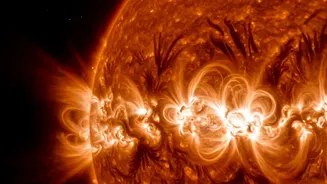
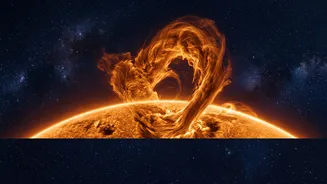
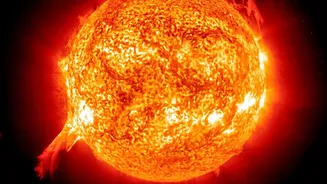
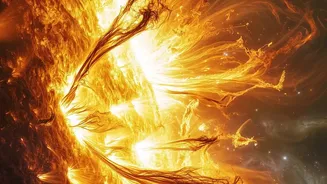
from the Visible Emission Line Coronagraph (VELC) on India's Aditya-L1 satellite with data from the ASPIICS instrument on the European Space Agency's (ESA) Proba-3. The collaboration has allowed for a more complete picture of coronal mass ejections (CMEs)—massive eruptions of plasma and magnetic fields from the Sun—than ever before. Observing these events in the region close to the Sun has historically been a major challenge for scientists. This joint effort marks a significant step forward in understanding the raw power of our star.
A Tale of Two Advanced Missions
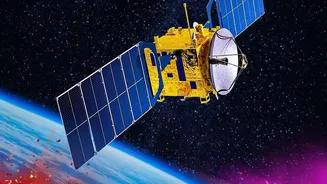
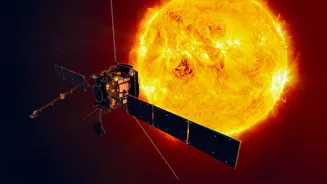
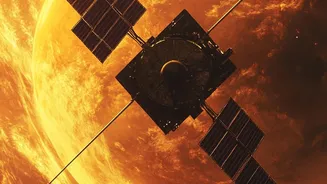
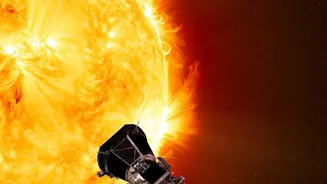
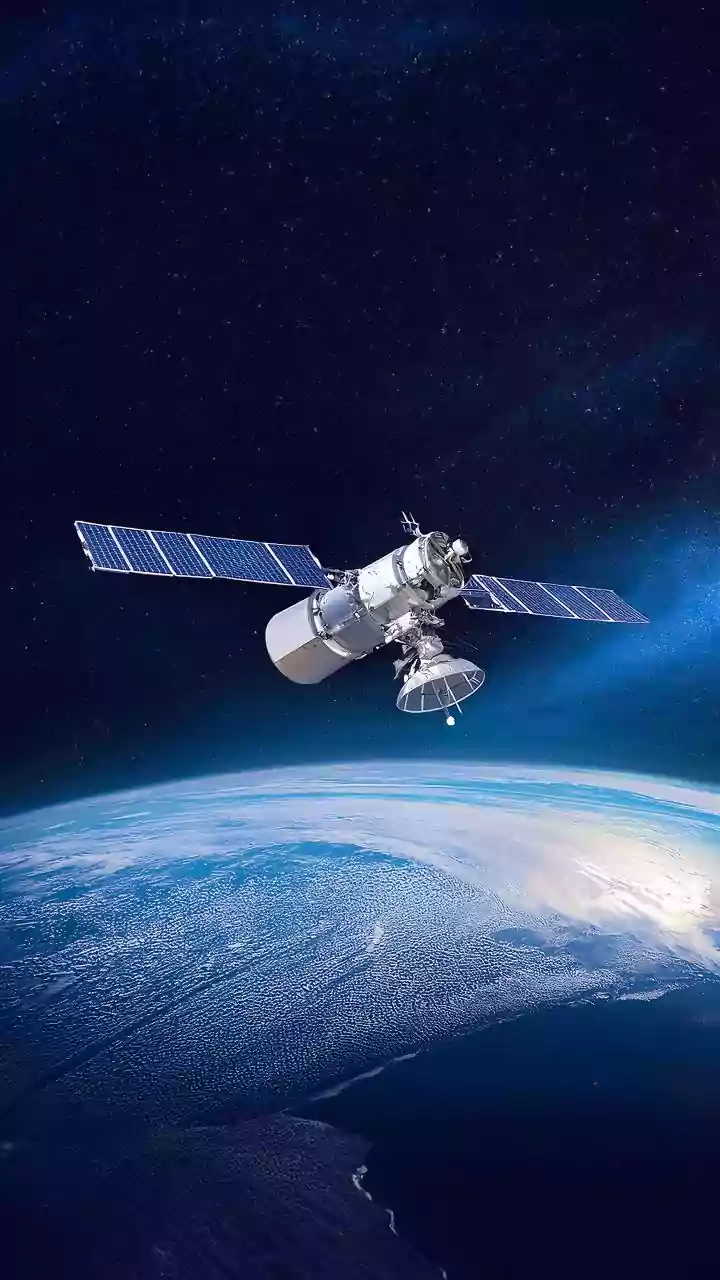
The success of this research lies in the complementary capabilities of the two missions. Aditya-L1, India's first dedicated solar observatory launched in September 2023, is positioned at the L1 Lagrange point, giving it an uninterrupted view of the Sun. Its VELC instrument, developed by IIA and ISRO, uses spectroscopy to analyse the properties of the light from the solar corona, which reveals information about the gas temperature and density. Proba-3, an ESA mission launched by an ISRO PSLV rocket in December 2024, is an engineering marvel in itself. It consists of two spacecraft flying in precise formation about 150 metres apart, creating a near-perfect artificial solar eclipse in space. This allows its coronagraph to capture incredibly sharp images of the Sun's faint corona without the overwhelming glare from the solar disk.
Capturing Solar Fury in Unprecedented Detail
The team focused on two specific CMEs observed on September 14 and 16, 2025. These two events showed remarkably different behaviours. The first was a fast-moving eruption, travelling at approximately 645 km/s, while the second was much slower, at around 145 km/s. By combining Proba-3's sharp images of the CMEs' shape and motion with Aditya-L1's spectroscopic data on their temperature and density, researchers could calculate the mass, density, and energy of the eruptions with greater accuracy. A key finding was the difference in how energy was distributed. In the faster CME, the thermal (heat) energy was only about 1% of the total kinetic and magnetic energy. In the slower one, the thermal energy was much more significant, eventually matching its kinetic energy.
Why This Matters for Earth
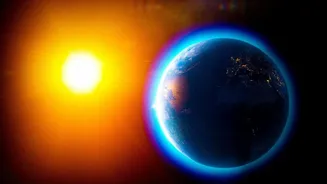
Understanding CMEs is not just an academic exercise. When these violent solar eruptions are aimed at Earth, they can have serious consequences. They can trigger geomagnetic storms that disrupt our power grids, damage satellites, and interfere with critical communication and navigation systems. By getting better measurements of a CME's energy and structure close to the Sun, scientists can improve models that predict how these storms will evolve as they travel through space. This could lead to more reliable space weather forecasting, giving us better warnings to protect our vital infrastructure both in orbit and on the ground. The ISRO-ESA partnership, which was recently extended to 2032, places a strong emphasis on space weather monitoring for exactly this reason.
A New Era of International Collaboration
This joint study is a powerful demonstration of the benefits of international cooperation in space science. The fact that the estimates for mass and thermal energy from both instruments agreed so well, despite using different techniques, gives scientists high confidence in the results. It proves that pairing an imaging coronagraph like Proba-3's with a spectroscopic one like Aditya-L1's provides a more complete, cross-checked view of solar phenomena than any single mission could achieve alone. The findings, published in the journal 'Astronomy & Astrophysics', highlight the growing scientific impact of India's Aditya-L1 mission and showcase the strength of coordinated international observations. This success sets a strong precedent for future joint projects between ISRO and ESA, promising even deeper insights into the Sun's mysteries.