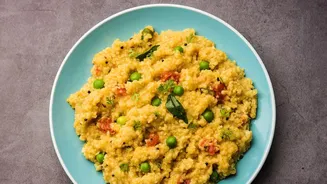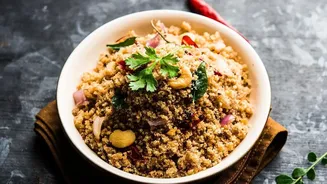

The First Step: Why Roasting Rava Is Crucial
The foundation of a great upma begins before any water hits the pan. Roasting the rava (semolina) is the single most important step to prevent a sticky outcome. When you dry roast rava on a low to medium flame until it's aromatic and slightly golden,
you're fundamentally changing its structure. Semolina is essentially coarse flour made from wheat, and it's full of starch. Roasting toasts these starch granules. This process, known as dextrinization, not only gives the rava a nutty flavour but also reduces its tendency to release excess starch and become gummy when cooked. Think of it as creating a protective barrier around each grain. This barrier ensures that when the rava is added to water, the grains swell individually rather than dissolving into a paste. If you skip this step, the raw starch will gelatinize too quickly and unevenly, creating clumps and that undesirable gluey consistency. Taking a few extra minutes to roast the rava properly is your first line of defense against a lumpy breakfast.
The Liquid's Role: The Magic of Hot Water
The temperature of your water makes a world of difference. Always use boiling hot water, never cold or lukewarm. This isn't just a matter of preference; it's about controlling the cooking process at a molecular level. Starch gelatinization—the process where starch granules absorb water and swell—starts to happen at around 60-70°C. When you add rava to boiling water (100°C), the high heat cooks the toasted grains almost instantly and evenly. Each grain gets hydrated at the same time, allowing them to swell up into separate, fluffy particles. In contrast, adding rava to cold or lukewarm water creates a starchy slurry. The grains sit in the water and begin to release starch slowly as the temperature rises, causing them to stick together and form lumps long before they are properly cooked. This slow cooking process leads to a pasty, porridge-like texture. For a consistently smooth and non-sticky upma, ensuring your water is at a rolling boil before introducing the rava is non-negotiable.
The Motion Matters: The Art of Steady Stirring
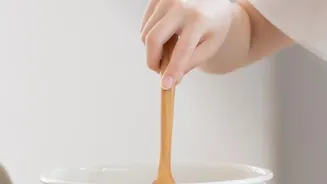
How you combine the rava and water is the final piece of the puzzle. The key is to add the roasted rava to the boiling water gradually, in a slow and steady stream, while stirring continuously. Dumping all the rava in at once is a recipe for disaster. The grains on the outside will immediately absorb water and swell, trapping the dry rava inside and creating stubborn lumps. By pouring slowly while whisking or stirring, you ensure that every grain gets individually coated with the hot liquid. This constant motion keeps the swelling granules separate from one another, preventing them from clumping together as they cook. Once the rava has absorbed most of the water and the mixture has thickened, you can reduce the heat, cover the pan, and let it steam for a few minutes. This final steaming step allows the grains to finish cooking and become perfectly tender without additional stirring, which could break them down. Afterwards, fluffing with a fork, rather than a spoon, helps maintain that separate, grainy texture.
Bringing It All Together: Ratio and Rhythm
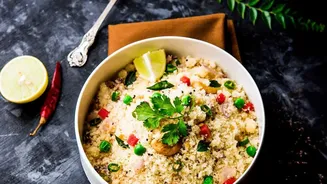
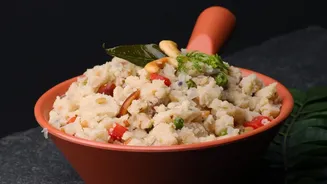
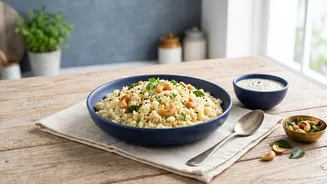
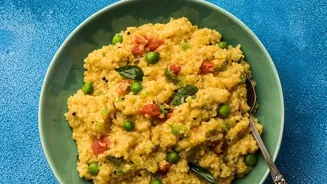
With the techniques down, the final element is the ratio of rava to water. While this can depend on the coarseness of your rava, a general rule of thumb is a 1:2.5 or 1:3 ratio of rava to water. For 1 cup of rava, using 2.5 to 3 cups of water will typically yield a soft, fluffy result. Too little water will leave the upma dry, while too much will make it mushy, regardless of your technique. The ideal rhythm is to first prepare your tempering (tadka) of spices, onions, and vegetables. Then, bring the water to a rolling boil within the same pan, seasoning it with salt. With the flame on low, begin your steady stream of roasted rava while stirring constantly. Once combined and thickened, cover and steam. Mastering this sequence—roasting the rava, using boiling water, and stirring as you pour—transforms upma from a gamble into a guaranteed success. The result is a dish that is light, flavourful, and has the perfect texture every single time.