








The Baseline: Giza and Saqqara
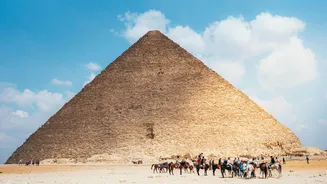
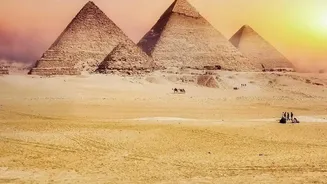
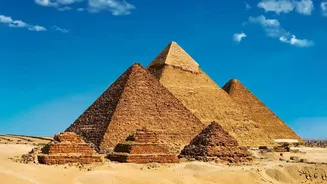
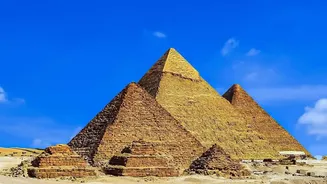
The Giza Plateau is an essential starting point. Home to the Great Pyramid, the Sphinx, and other iconic structures, it is the face of ancient Egypt. However, its fame comes with drawbacks: large crowds are a constant, and the experience can feel commercialised.
A short drive away, the Saqqara necropolis offers a compelling counterpoint. Here you'll find the Step Pyramid of Djoser, the oldest stone pyramid, and numerous tombs with intricate carvings. Crowds at Saqqara are generally thinner than at Giza, providing a bit more breathing room to appreciate the dawn of pyramid construction. Costs for both are significant but standard for premier tourist sites, and visiting early is key to avoiding the worst of the crowds and heat.
The Open-Air Museum: Luxor's East and West Banks
Often called the world's greatest open-air museum, Luxor is the heart of Pharaonic Egypt. The East Bank holds the sprawling Karnak and Luxor Temples, connected by the Avenue of Sphinxes. These sites are immense and historically vital but draw huge crowds, especially Karnak, which is the second-largest ancient religious site in the world. The West Bank is home to the Valley of the Kings and the Valley of the Queens, where pharaohs were buried in hidden, lavishly decorated tombs. While a general entry ticket to the Valley of the Kings grants access to three tombs, prized tombs like those of Tutankhamun and Seti I require separate, more expensive tickets. The cost-benefit analysis here is clear: the historical significance is unparalleled, but you must be prepared for crowds and a complex ticketing structure.
The Southern Marvel: Abu Simbel
Visiting the twin temples of Abu Simbel requires a significant commitment of time and money, typically involving a flight or long convoy from Aswan. Yet, few who make the journey regret it. Carved into a mountainside by Ramesses II, the sheer scale and audacity of the temples are breathtaking. One of its most famous features is the biannual Sun Festival, when light illuminates the inner sanctuary. The cost is one of the highest for any single ancient site in Egypt, but the reward is a monument of immense power and a remarkable story of modern engineering, as the entire complex was relocated in the 1960s to save it from the rising waters of Lake Nasser. Crowd levels can be high, especially for the morning sun alignment, but the remote location ensures the experience feels more epic than cluttered.
The Hidden Gem: Dendera and Abydos
For those seeking a deeper, more personal connection with ancient Egypt, a day trip from Luxor to Dendera and Abydos is invaluable. The Temple of Hathor at Dendera is one of the best-preserved temples in all of Egypt, renowned for its vividly coloured ceilings that look as though they were painted yesterday. Further north, Abydos was one of ancient Egypt's most important religious centers, home to the cult of Osiris. The Temple of Seti I contains some of the most beautiful and detailed reliefs of any pharaonic-era structure, as well as the famous Abydos King List. The key advantage of these sites is the relative lack of crowds, allowing for leisurely exploration. While the cost involves a full-day tour, many travellers find that the tranquility and stunning preservation offer more memorable encounters with history than the busier, more famous locations.
The Riverside Pause: Philae and Kom Ombo
Often visited as part of a Nile cruise between Luxor and Aswan, the temples of Philae and Kom Ombo offer unique historical and scenic appeal. Kom Ombo is a rare dual temple, dedicated to both the crocodile god Sobek and the falcon god Horus. Its setting right on the Nile is picturesque, especially at sunset. Philae Temple, dedicated to the goddess Isis, was also relocated to save it from flooding and now sits beautifully on Agilkia Island, accessible only by a short boat ride. This approach makes the visit feel special, though it can get crowded with tour groups from the cruises. The costs are generally bundled into cruise packages, but the historical interest lies in their Greco-Roman era construction, showing a fascinating blend of architectural styles.