
A 'Desi Reality Check' Goes Viral
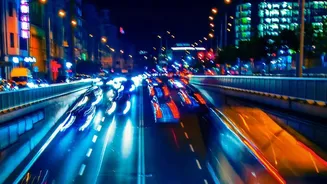
A short video clip, reportedly filmed in Gurugram, recently made the rounds on social media, amassing millions of views. It showed the central touchscreen of a Tesla Model Y attempting to make sense of dense Indian traffic. The screen, which visualises
what the car’s cameras and sensors detect, was a flurry of icons representing cars, trucks, motorcycles, and pedestrians, all jostling for space. The reaction online was swift and largely humorous. Viewers joked that the car was having a “desi reality check” and that “even AI can’t predict” the organised chaos of Indian roads. Comments like “Tesla hang hogya” (a colloquialism for a computer freezing) captured the general sentiment: the sophisticated American technology was seemingly stumped by the local environment.
What a Busy Screen Actually Means
While the jokes write themselves, the conclusion that the system failed is based on a fundamental misreading of what the visualisation shows. A screen packed with detected objects is not a sign of a system that is confused or crashing. On the contrary, it is evidence that the system is working as intended. Its job is to identify and track everything in its immediate vicinity that could pose a risk or influence its path. In the dense, fluid traffic of a city like Gurugram, this means detecting dozens of objects simultaneously. The cluttered display simply reflects the complex reality the car is processing. It’s a visual representation of the sheer volume of data the AI is sifting through in real time—not a sign that it is overwhelmed, but that it is aware.
The Difference Between Autopilot and 'Full Self-Driving'
Much of the public discourse around Tesla’s technology is clouded by confusion over its capabilities. Every new Tesla comes with Autopilot, a driver-assistance system that combines adaptive cruise control and lane-keeping, primarily for highway use. The more advanced, optional feature is called “Full Self-Driving (Supervised)” or FSD. While it can navigate city streets, change lanes, and respond to traffic signals, it is still classified as a Level 2 system. This designation is crucial: it means the driver must remain fully attentive and ready to take control at any moment. The car is not autonomous. The name “Full Self-Driving” has been criticised by regulators and safety advocates for being potentially misleading, as it suggests a capability the system does not yet possess.
Why We Are Primed to See Failure
The rush to declare the Gurugram clip a failure doesn't happen in a vacuum. Tesla itself has contributed to public confusion with its marketing. The company has been criticised for releasing promotional videos that appear to show drivers being inattentive, directly contradicting the fine print that mandates constant supervision. In the past, engineers have even testified that a key promotional video demonstrating FSD capabilities was staged. This history, combined with the high stakes of autonomous vehicle technology, creates an environment where the public is often skeptical and primed to interpret any anomaly as a catastrophic failure. When a company’s marketing overstates a product’s capability, it’s natural for the public to seize on any evidence that seems to prove it can’t live up to the hype.