






The silent, intricate network that keeps tens of thousands of flights safe daily showed its fragility recently, as an equipment failure threatened to grind US air travel to a halt, prompting a nationwide ground stop.
What Exactly Happened?
On Friday, November 13, 2026, the Federal
Aviation Administration (FAA) took the drastic but precautionary step of issuing a nationwide ground stop, halting all departing flights across the United States for several hours. The order came after the system that air traffic controllers rely on for radar and communications became dangerously unstable. While the approximately 3,500 aircraft already in the sky were able to land safely, the event caused chaos on the ground, leading to thousands of cancellations and delays that rippled through the system for days. This was only the third such nationwide ground stop in history, with the others occurring after the September 11 attacks and a separate system failure in January 2023.
The Culprit: A Faulty Router
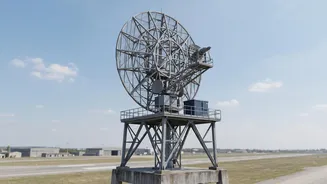
Initial investigations by the FAA pointed not to a cyberattack, but to a seemingly routine equipment upgrade. The problem appears to have originated at a radio communications site in El Dorado, Arkansas, where a contractor, L3Harris, was working to modernize the network. During the process of replacing old copper wiring with fiber-optic cable, a newly installed router began flooding the legacy telecommunications network with an overwhelming amount of data — about 1,000 connection attempts every few seconds. This data deluge destabilized the system, affecting 17 of the FAA's 22 air route traffic control centers and disrupting critical radar and communication feeds that controllers depend on.
A System Showing Its Age
This incident has cast a harsh spotlight on the age and vulnerability of America’s air traffic control infrastructure. For decades, the FAA has been attempting to modernize its systems, many of which still rely on technology from the 1980s or even earlier. In fact, just weeks before the shutdown, the FAA announced a plan to finally phase out the use of floppy disks at over 400 facilities by 2028. The November failure highlighted a critical risk in this slow-moving upgrade process: the volatile interface between new, high-speed digital components and the older, analog equipment they are meant to replace. This 'clash of technologies' can, as was demonstrated, create unforeseen failures with massive consequences.
The Path to Modernization
Following a similar, though less severe, outage of the NOTAM (Notice to Air Missions) system in January 2023 caused by an accidental file deletion, pressure has been mounting to accelerate the overhaul of the nation's aviation technology. In July 2025, Congress appropriated $12.5 billion for this purpose, with a new initiative aiming to complete a significant first phase of modernization by 2028. This includes replacing legacy voice switches, installing digital radio systems, and upgrading radar components. However, the recent failure has prompted calls for even greater investment, with some officials suggesting an additional $50 billion is needed to fully rebuild and future-proof the entire system, from control centers to airport towers.