









From Ambition to Action
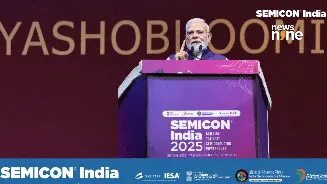
For years, India's semiconductor dream was a story of future potential. Now, that narrative is changing. The fifth edition of SEMICON India, inaugurated by Prime Minister Narendra Modi, is themed “Silicon to Systems: Building the Ecosystem,” reflecting
a shift from planning to execution. The government's focused strategy, beginning with the India Semiconductor Mission (ISM) in 2021, is bearing fruit. The initial phase, Semicon 1.0, has already seen 12 projects approved with a cumulative investment of over ₹1.64 lakh crore. More importantly, three of these projects have already commenced commercial production in 2026, with MeitY Secretary S. Krishnan stating that five to six units could be operational by the end of the year. This tangible progress is what makes SEMICON India 2026 so significant; it’s a showcase of real-world capability, not just policy proposals.
A Global Stage for 'Make in India'
At its core, SEMICON India 2026 is a platform to attract global collaboration and investment. With over 500 exhibitors, including more than 240 international companies and delegations from over 40 countries, the event is a powerful magnet for the world’s top technology firms. Industry giants like ASML, Micron, Tata Electronics, and Lam Research are in attendance, highlighting the event's global stature. The conference serves as India's premier pitch to the world, demonstrating its commitment through progressive policies like Semicon 2.0. Approved in July 2026 with a massive outlay of ₹1.27 lakh crore, this next phase expands support across the entire value chain—from chip design and materials to advanced packaging and R&D. By bringing global decision-makers to India, the event aims to prove that the country is not just joining the supply chain, but becoming integral to it.
Building the Ecosystem from the Ground Up
A successful semiconductor industry requires more than just fabrication plants (fabs). It needs a holistic ecosystem encompassing design, materials, equipment, and, most critically, skilled talent. SEMICON India 2026 places a heavy emphasis on these foundational pillars. The government is actively supporting startups and academia, providing state-of-the-art design tools to over 332 academic institutes and 105 startups. Furthermore, 24 startups have been approved under the Design-Linked Incentive (DLI) scheme to foster local innovation. The conference itself features a dedicated Workforce Development Pavilion, a student hackathon, and innovation showcases, all aimed at closing the skills gap between India’s vast design talent and the needs of advanced manufacturing. This focus on building a complete 'Sand to Silicon to Systems' value chain is a long-term play for sustainable growth and technological sovereignty.
The Challenges Ahead
Despite the clear momentum, the path to becoming a semiconductor hub is not without its obstacles. Building chip fabs is an incredibly capital-intensive process that requires years of development and unwavering access to resources like uninterrupted power and ultrapure water. Furthermore, the global semiconductor landscape is fiercely competitive. However, the government's strategy with Semicon 2.0, which extends the program's timeline and broadens its scope, shows an understanding of these long-term challenges. The mission now includes support for crucial areas like compound semiconductors, silicon photonics, and equipment manufacturing, demonstrating a more mature and comprehensive approach. Events like SEMICON India are vital for maintaining momentum, fostering strategic partnerships, and navigating the complexities of building a resilient domestic industry poised to meet a domestic demand expected to reach $200 billion.