

Kraków, Poland: The Unbroken Heart of a Nation
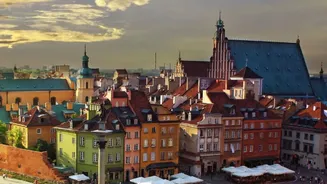
Poland’s cultural capital, Kraków, is a city that wears its history with grace. Unlike Warsaw, which was devastated in World War II, Kraków’s historic centre remained largely untouched. Its UNESCO-listed Old Town is one of the best-preserved medieval
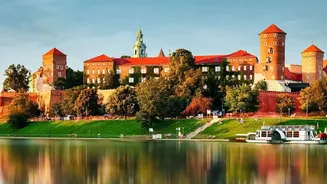
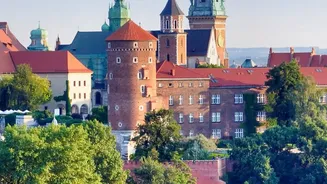
city centres in Europe. The heart of it all is Rynek Główny, the largest medieval town square in Europe, where the Renaissance-era Cloth Hall still buzzes with vendors. Towering over the city is Wawel Castle, the spiritual and political heart of Poland for centuries and the coronation site for its kings. Wandering from the grandeur of Wawel Hill to the poignant streets of the historic Jewish Quarter, Kazimierz, you feel the city’s deep narrative—a story of kings, scholars, artists, and survivors. It’s a place that feels both monumental and intimately human.
Budapest, Hungary: The Pearl of the Danube
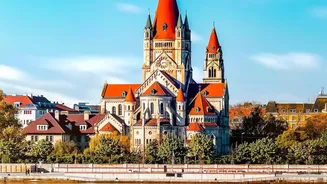
Straddling the Danube River, Budapest is a city of dualities—Buda and Pest—that form a single, stunning urban landscape. Its UNESCO World Heritage site encompasses the dramatic Buda Castle Quarter, the grand Andrássy Avenue, and the panoramic banks of the Danube. The Buda Castle Quarter is a living chronicle of Hungarian history, with visible layers from medieval, Gothic, and Baroque eras shaped by centuries of construction, destruction, and rebirth. It houses landmarks like Matthias Church, with its colourful tiled roof, and the fairytale-like Fishermen’s Bastion. Across the river in Pest, Andrássy Avenue is a masterpiece of 19th-century urban planning, lined with magnificent neo-renaissance mansions and townhouses. This city is a testament to the resilience and grandeur of the Hungarian capital through various great periods in its history.
Rila Monastery, Bulgaria: A Fortress of Faith
Nestled deep in the Rila Mountains, this Eastern Orthodox monastery is the spiritual heart of Bulgaria and one of its most important cultural monuments. Founded in the 10th century by the hermit St. Ivan of Rila, it served as a stronghold of Bulgarian culture and language during five centuries of Ottoman rule. Following a fire in the 19th century, the monastery was rebuilt and is now considered a masterpiece of the Bulgarian National Revival architecture. Visitors are greeted by towering fortress-like walls that open into a breathtaking courtyard. The church’s exterior is covered in vibrant frescoes depicting biblical scenes, while the striped arches and serene mountain setting create a powerful sense of peace and history. As a UNESCO site, it represents both a spiritual sanctuary and a symbol of national identity.
Riga, Latvia: An Art Nouveau Metropolis
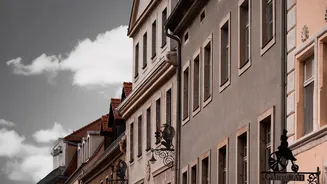
At the turn of the 20th century, the prosperous port city of Riga underwent a massive building boom, transforming its centre into the world's foremost gallery of Art Nouveau architecture. Today, roughly a third of all buildings in central Riga belong to this flamboyant style, the highest concentration anywhere. A walk through the city's 'Quiet Centre,' particularly on streets like Alberta iela and Elizabetes iela, is an architectural feast. Facades are adorned with elaborate sculptures, intricate floral motifs, and flowing, organic lines that were a rebellion against the rigid styles of the 19th century. This architectural heritage, born from a period of rapid economic growth, gave the city a unique and expressive identity that remains its most defining visual feature.
Plitvice Lakes, Croatia: Nature as Cultural Heritage
While heritage often brings to mind castles and cathedrals, Croatia’s Plitvice Lakes National Park shows how nature itself can hold deep cultural significance. A UNESCO World Heritage site since 1979, this park is a stunning cascade of 16 terraced lakes connected by waterfalls, all set in a deep forest. The area's history of human settlement dates back to prehistoric times, and it has long been a place of legends and stories that shape local culture. One legend tells of a 'Black Queen' who created the lakes in response to a great drought. Even the names of the lakes and waterfalls are tied to local folklore and historical figures. This interplay of breathtaking natural beauty and human history makes Plitvice a powerful reminder that cultural landscapes are not just built, but also grown.