




The Dynamic Demands of Skating
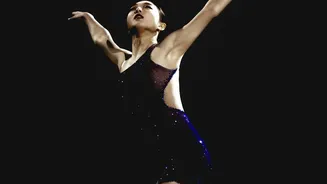
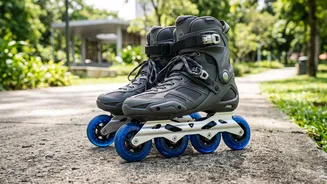
Skating, whether on quad rollers or inline skates, is an exercise in dynamic stability. It forces your body to constantly adjust to a changing centre of mass while in motion. This isn't about holding a single pose; it's about maintaining equilibrium while propelling
yourself forward, turning, and stopping. This continuous adjustment is a powerful workout for your core muscles, which are perpetually engaged to keep you upright. The act of skating builds what experts call 'muscle memory,' training your body to react instinctively to prevent a fall. This develops a reactive form of coordination, essential for navigating unpredictable environments. Your limbs work in tandem, your muscles fire in sequence, and your brain learns to process spatial information at speed, improving agility and reflexes.
The Meditative Flow of Tai Chi
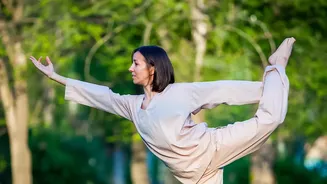
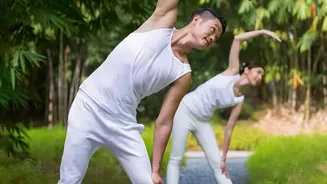
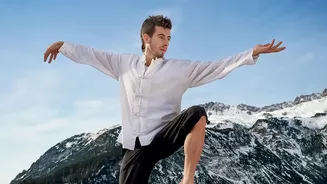
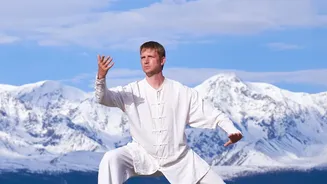
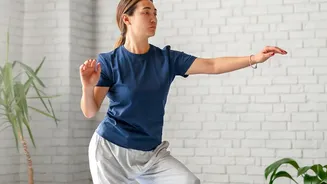
In stark contrast to skating's speed, Tai Chi is the art of slow, deliberate movement. Often described as 'meditation in motion,' this ancient Chinese practice involves a series of flowing postures that challenge coordination in a more internal, mindful way. Tai Chi improves coordination by demanding immense focus on posture, weight shifting, and precise body alignment. The movements are continuous, gentle, and require conscious control, strengthening the neuromuscular pathways between the brain and muscles. This practice builds a deep sense of body awareness and control, allowing you to fine-tune muscle engagement and maintain stability through slow, controlled transitions. It is this focus on the mind-body connection that makes it a powerful tool for enhancing motor control.
Two Approaches to Superior Balance
Both activities are champions of balance, but they build it differently. Skating improves balance by forcing your body to manage momentum and external forces. Your stabilising muscles get a constant workout as you glide, learning to make micro-adjustments to stay steady on a narrow base of wheels. Tai Chi, on the other hand, improves balance by focusing on controlled weight shifting and stability in static and flowing stances. Research has shown that regular Tai Chi practice significantly enhances stability and can reduce the risk of falls, particularly in older adults, by improving leg strength and postural control. Skating builds reactive balance for a world in motion, while Tai Chi cultivates foundational stability from the ground up.
Proprioception: The Body's Sixth Sense
A key element in coordination for both disciplines is proprioception — your body's innate ability to sense its position in space without looking. Skating enhances this sense by constantly challenging it; balancing on wheels requires a heightened awareness of your body's alignment and movement. Tai Chi cultivates proprioception more mindfully. The slow, intentional movements encourage practitioners to pay close attention to the position of their limbs, the angle of their joints, and the distribution of their weight. Studies suggest that Tai Chi can improve the speed and ability of nerves to send signals to the brain, directly boosting this internal sense. While skating hones a fast, reactive proprioception, Tai Chi develops a more conscious and deliberate form of it.
Which Path Is Right for You?
Choosing between skating and Tai Chi depends entirely on your personal fitness goals and temperament. If you seek a high-energy, cardiovascular workout that builds reactive coordination and agility, skating is an excellent choice. It’s a fun, dynamic way to engage your entire body and improve your ability to move confidently through space. If you prefer a low-impact, meditative practice that reduces stress while building deep core strength, flexibility, and mindful control, Tai Chi is unparalleled. It offers a gentler path to physical and mental harmony, strengthening the body while calming the mind. Both are fantastic for coordination; the key difference lies in the journey—one is a swift glide, the other a mindful walk.