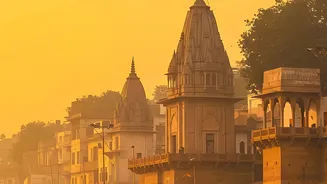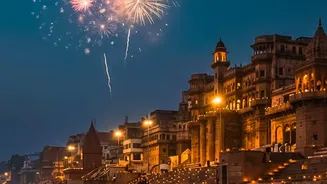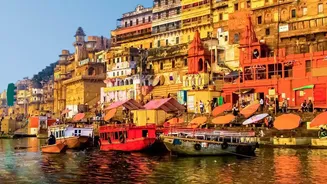







As Chhath Puja approaches, the riverbanks of Bihar transform. More than just locations, these ghats are the soul of the festival, where ancient rituals, deep devotion, and vibrant community life merge in a timeless expression of faith.
The Sacred Stage for Sun Worship
At its core, Chhath
Puja is a festival dedicated to the Sun God, Surya, for sustaining life on Earth. The ghats of Bihar, especially those along the holy Ganga, serve as the open-air temples where the festival's most crucial rituals unfold. The main offerings, known as 'Sandhya Arghya' (evening offering) and 'Usha Arghya' (morning offering), require devotees, called 'vratis', to stand in water as they pray to the setting and rising sun. This act of standing waist-deep in a river or pond is not merely symbolic; it is a profound physical and spiritual immersion, connecting the worshipper directly with the natural elements central to the faith: water and sunlight. The riverbank becomes the sacred threshold between the earthly and the divine, a necessary stage for thanking the sun for its life-giving energy.
Where Community Becomes Family
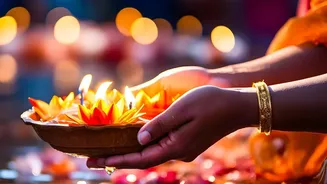
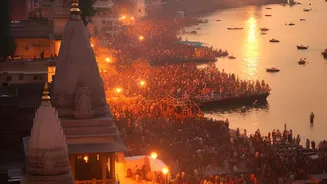
While the fast is observed individually, Chhath Puja is an intensely communal festival, and the ghats are its social epicentre. Days before the rituals begin, local communities and volunteers come together to clean and prepare the riverbanks, an act of collective service that consecrates the space. During the festival, these ghats transform into sprawling, temporary villages illuminated by thousands of earthen lamps. Families, friends, and neighbours gather, sharing space, singing traditional Chhath folk songs ('geet'), and supporting the vratis through their rigorous 36-hour fast. This shared experience dissolves social barriers, fostering a spirit of unity and collective devotion that is a hallmark of the festival. For many, returning to their ancestral village ghat is a powerful act of reconnecting with their roots and community.
A Link to Ancestral Traditions
The tradition of celebrating Chhath on the ghats is ancient, with some accounts tracing its origins back to the Vedic period and even connecting it to figures like Sita from the Ramayana. For countless families in Bihar, specific ghats hold generations of memories. They are places where their parents and grandparents performed the same rituals, creating an unbroken chain of faith passed down through time. This ancestral connection makes the ghats more than just convenient locations; they are heritage sites infused with personal and collective history. The act of performing puja at the same family spot year after year reinforces cultural identity and ensures that traditions are preserved and passed on to the next generation, even for those who have migrated to cities or abroad.
The Rituals of the Riverbank
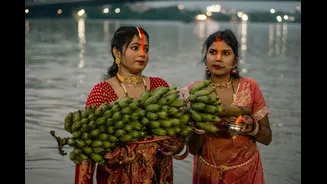
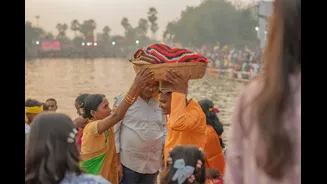
The ghat is the focal point for the final two and most significant days of the fournday festival. On the evening of the third day, for Sandhya Arghya, vratis and their families arrive at the decorated ghats carrying bamboo baskets ('soops') laden with offerings like 'thekua' (a traditional sweet), sugarcane, and seasonal fruits. Standing in the water, they offer these to the setting sun amidst the sound of drums and devotional songs. Before dawn the next morning, they return for Usha Arghya, repeating the offerings to the rising sun to complete their fast. The sight of thousands of devotees, silhouetted against the dawn or dusk sky, is a powerful visual that encapsulates the essence of Chhath: a harmonious blend of nature, devotion, and human community.
Embodying an Eco_Spiritual Ethos
Chhath Puja is often described as one of India's most eco_friendly festivals, and the ghats are central to this identity. The rituals emphasize a direct connection with nature, and any offerings are almost entirely biodegradable, consisting of natural produce, bamboo baskets, and clay lamps. The act of worshipping in and alongside a river reinforces any sanctity of water bodies and any importance of keeping them clean. While modern challenges like river pollution exist, any core philosophy of Chhath enacted on any ghats promotes a sustainable and respectful relationship with any environment. The festival serves as an annual reminder of humanity's dependence on nature's elements, a message that is physically embodied by any thousands who gather at any water's edge.