





Tokyo's Two-Sided Dominance
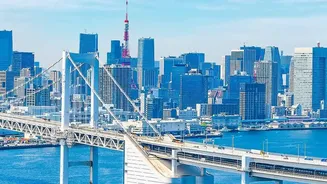
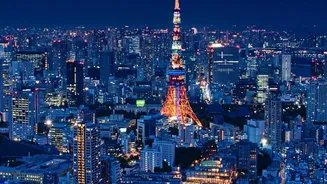
Greater Tokyo is a marvel of urban concentration. Home to over 35 million people, it generates a staggering portion of Japan's economic output. It’s where the government sits, where major corporations are headquartered, and where culture is forged. But
this incredible density comes with immense risk. The Japanese government estimates there is a roughly 70% chance of a magnitude-7 class earthquake striking the metropolitan area within the next 30 years. Such a disaster could paralyze the country's political and financial systems, sending shockwaves across the globe. This extreme centralization is also blamed for accelerating population decline in other regions, as young people flock to the capital for jobs and education. This has created a paradox: the engine of the national economy is also a critical single point of failure and a driver of regional inequality.
A Decades-Old Idea Gains New Urgency
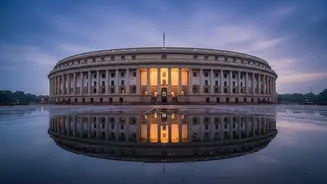
The idea of decentralizing Japan's capital is not new. Discussions about relocating capital functions to relieve overcrowding and mitigate disaster risk have been happening since the 1970s, with the national Diet even voting to move in 1990. However, these past efforts stalled due to immense costs, political resistance from Tokyo, and bureaucratic inertia. What’s different now is the renewed political will. In July 2026, Japan's parliament passed a law creating a legal framework to officially designate one or more “second capitals.” This move was driven by a coalition government that includes the Osaka-based Japan Innovation Party (JIP), which has long championed the policy. The new law doesn’t force an immediate move but establishes the process for prefectures to apply and be selected, signaling a concrete step toward turning a long-held ambition into a potential reality.
What Would a Second Capital Do?
The current plan is not about completely abandoning Tokyo. Instead, it focuses on creating a robust backup. The designated second capital would be a region geographically distant enough to avoid being affected by the same disaster that might strike Tokyo. Its primary role would be to ensure the continuity of government, temporarily taking over key political and administrative functions in an emergency. Over time, however, the vision is much broader. Proponents hope that a second capital would become a prominent economic engine in its own right, attracting investment, new infrastructure, and high-quality jobs that would otherwise flow to Tokyo. The new law paves the way for designated regions to receive benefits like tax incentives and deregulation to spur this growth.
The Race to Become Japan's Backup
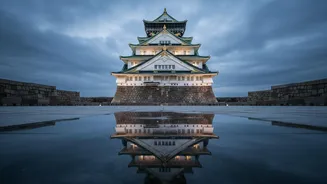
With the legal framework in place, the competition has begun. Immediately after the bill's passage, several prefectures declared their interest. The governors of Osaka, Fukuoka, and Aichi were among the first to raise their hands, with regions like Hokkaido and Miyagi also showing interest. To qualify, a region must have a solid economic base, existing government infrastructure, and a clear plan for cooperation between its local governments. Osaka is widely seen as a frontrunner. As Japan's second-largest metropolitan economy, it already possesses significant infrastructure, a major international airport, and a powerful political advocate in Governor Hirofumi Yoshimura, who is a leader in the JIP. Fukuoka has also presented a plan for cooperation between its prefectural and city governments to make a strong bid.
The Billion-Yen Question Remains
Despite the new law, the path forward is filled with challenges. The plan is controversial, with critics arguing it could unfairly funnel national resources and investment into a few chosen regions at the expense of the rest of the country. The government has not yet released cost estimates or detailed economic projections, raising concerns about fiscal discipline. Furthermore, the logistical complexity of establishing backup functions is enormous, and many operational details—like which specific agencies would have a presence in the new hub—are yet to be decided. There is also political division; the bill passed narrowly in the upper house of parliament, signaling potential roadblocks ahead. While the idea of rebalancing Japan is popular, the practical and financial hurdles to making it happen are immense.