




A Landmark Trial on a Treacherous Route
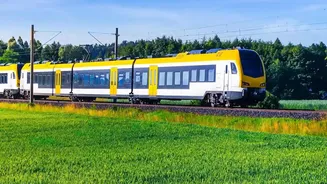
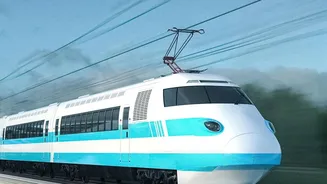
The South Western Railway has commenced extensive trials for the much-anticipated Vande Bharat Express service connecting Bengaluru to the coastal city of Mangaluru. These tests, which started on August 12 and are scheduled to run until August 20, are not
just a routine check. They represent a major milestone in Indian Railways' effort to conquer one of its most technically demanding routes. The focus of the trial is the formidable 55-kilometre Sakleshpur-Subrahmanya Road ghat section, a stretch of track that winds through the fragile ecosystem of the Western Ghats. This section is notorious for its steep gradients, 108 sharp curves, 57 tunnels, and 226 bridges, making it a significant operational challenge.
The Ghat Section Challenge
For years, the primary obstacle to running a high-speed service like the Vande Bharat on this line has been the ghat section's geography. The steep inclines have traditionally required conventional trains to use additional 'banker' locomotives for assistance, a solution not practical for the Vande Bharat's integrated design. Furthermore, the region is highly susceptible to landslides, especially during the monsoon, which can disrupt services for days. To navigate this, the Vande Bharat rake being used is a specially modified 20-coach train built by the Integral Coach Factory in Chennai. Its most critical feature is an Automatic Emergency Braking (AEB) system, which automatically applies the brakes if the train exceeds a preset speed limit of 30 kmph on the steep descent, ensuring safety.
What a New Service Would Mean
The introduction of a Vande Bharat service would be a game-changer for connectivity between the state capital and the coastal region. Currently, the journey by road can take between eight to ten hours. The new train is expected to slash this travel time to as little as five to seven hours, offering a faster, more reliable, and comfortable alternative for commuters, tourists, and business travelers. The entire route was fully electrified in December 2025, paving the way for faster electric train operations. A successful launch would not only strengthen economic and social ties between the two major Karnataka cities but also provide a significant boost to tourism in the coastal and Malnad regions.
Why the Final Whistle Hasn't Blown
Despite the promising trials, a launch date for commercial operations is yet to be confirmed. The service was initially anticipated to start by June 2026 but was delayed because a Vande Bharat rake equipped with the mandatory emergency braking system was not available. Now that the specialized train is on-site, the results of the ongoing trials are paramount. Personnel from the Research Designs and Standards Organisation (RDSO) are meticulously examining every parameter, from stability and acceleration to the performance of the AEB system. Once the trials conclude, the RDSO will submit a detailed report. This report must then be reviewed and approved by the Railway Board and, crucially, the Commissioner of Railway Safety before any passenger services can be authorized. There has also been some speculation and public debate about the final route and stops, with some proposals suggesting the train might bypass Mangaluru Central station, though the railways have not confirmed these details.