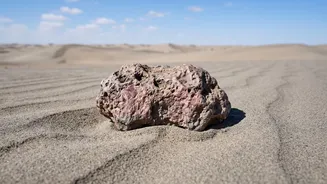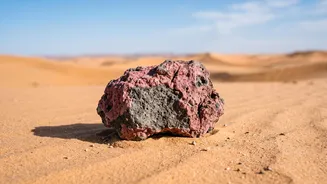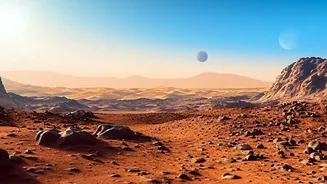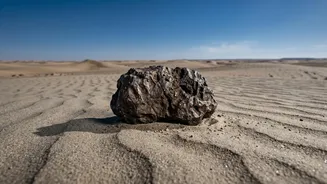






Lying in the vast, sun-scorched expanse of the Sahara Desert, a rose-coloured rock held a secret billions of years old. This messenger from space, Teghaza 001, is more than just a stone; it's a chapter from the autobiography of another world.
A Messenger From Another World
In 2022,
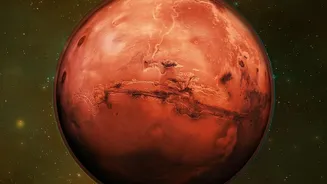
meteorite hunters discovered a remarkable 800-gram rock in a salt plain in Mali. It was later named Teghaza 001. At first glance, it was just one of many space rocks found in the desert, but scientific analysis soon revealed its extraordinary nature. NASA-funded scientists confirmed the rock was a visitor from Mars, blasted from its surface by an asteroid impact long ago before journeying through space and landing on Earth. What makes Teghaza 001 truly special, however, is its age. It is one of the oldest Martian meteorites ever found, a relic from the Red Planet's infancy.
Reading a 4.1-Billion-Year-Old Clock
Determining the age of something that has traveled millions of kilometres through space requires incredible precision. Scientists used a method called radiometric dating, which acts like a natural clock. By examining tiny, durable crystals of a mineral called zircon embedded within the meteorite, researchers could measure the decay of radioactive elements like uranium into lead. This process happens at a predictable rate, allowing them to calculate that the rock was altered by water at least 4.1 billion years ago, meaning the rock itself formed even earlier. This makes it a priceless sample of Mars's ancient crust.
A 'Rosetta Stone' for Mars
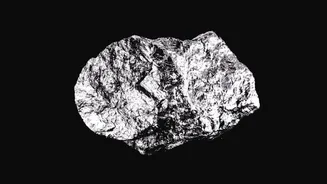
Researchers have dubbed Teghaza 001 a 'Rosetta Stone' for Mars because of what it reveals. Unlike other Martian meteorites, its unique mineral composition tells a complex story. It shows evidence of having been formed from cooling magma and then later altered by liquid water. This provides a rare snapshot of a dynamic water cycle on ancient Mars, suggesting water once flowed through the planet's crust. The discovery challenges and refines our understanding of how Mars evolved from a potentially wetter world into the dry, cold planet we see today.
Clues to a Watery Past
The evidence of water interaction is perhaps the most exciting part of the discovery. The minerals in Teghaza 001 preserve chemical signatures that point to a past where liquid water was a key geological force on the planet. This finding is crucial as we search for signs of past life on Mars. While the meteorite itself doesn't contain evidence of life, it points to an environment that could have once been habitable. Understanding the history of water on Mars helps scientists narrow down where to look for such signs in future missions, explaining why Mars became dry while Earth remained a water world.
The Sahara: A Celestial Library
There's a reason so many important meteorites are found in the Sahara Desert. The arid climate is perfect for preserving these space rocks for thousands of years, preventing them from weathering away as they would in wetter environments. Furthermore, the vast, light-coloured sand seas make the dark, dense meteorites relatively easy to spot. Deserts like the Sahara and the ice fields of Antarctica act as natural collection plates for these messengers from space, turning the barren landscapes into libraries of cosmic history, holding not only pieces of asteroids but also fragments of our planetary neighbours.