






A Setback Met with Ambition
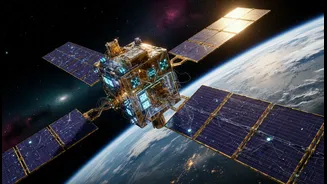
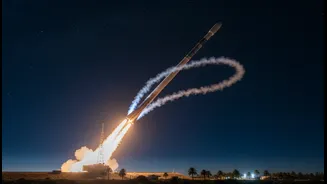
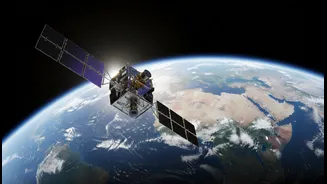
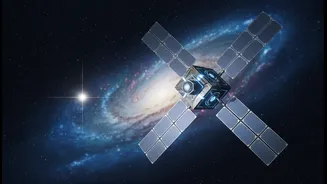
In early May 2026, India’s private space sector celebrated a milestone as GalaxEye launched its maiden satellite, 'Mission Drishti', aboard a SpaceX Falcon 9 rocket. It was hailed as the world's first satellite featuring a hybrid OptoSAR sensor. However,
the mission faced a critical anomaly in the final stages of its early orbit phase. The company announced on July 7, 2026, that communication with the spacecraft was lost, likely due to an intense geomagnetic solar storm that damaged critical systems. Despite ongoing recovery efforts, the chances of re-establishing contact are low. Rather than halting operations, the IIT Madras-incubated startup is leveraging the invaluable engineering data gathered from the mission to forge ahead. Founder and CEO Suyash Singh confirmed that the company will launch two new and improved OptoSAR satellites within the next two years, signalling a powerful commitment to its vision.
Decoding the OptoSAR Advantage
So, what makes GalaxEye's technology special? The answer lies in 'OptoSAR', a term that represents the fusion of two distinct types of satellite imaging. Traditional satellites typically use either optical sensors or Synthetic Aperture Radar (SAR). Optical sensors work like a powerful camera, capturing high-resolution images that are easy to interpret visually. Their major limitation is that they cannot see through clouds, smoke, or in darkness. SAR, on the other hand, works by bouncing radar signals off the Earth's surface. This allows it to see through any weather conditions and at any time of day or night. The drawback is that SAR images are often complex and require expert analysis to understand. GalaxEye's innovation is to place both an optical multi-spectral imager and a SAR sensor on a single satellite. This allows it to capture two types of data for the same location simultaneously, creating a single, fused, analysis-ready image that offers the clarity of an optical photo with the all-weather reliability of radar.
Real-World Impact and Applications
The ability to generate consistent, high-quality satellite imagery has profound implications for a country like India. During the monsoon season, persistent cloud cover can render optical satellites ineffective for weeks, hindering crucial monitoring activities. GalaxEye's OptoSAR technology promises to overcome this challenge, providing an uninterrupted stream of data for a wide range of applications. This includes disaster management, where it can rapidly assess flood damage or track the spread of forest fires even through smoke and clouds. In agriculture, it can monitor crop health and soil moisture to improve yields. For national security, it offers enhanced surveillance and border monitoring capabilities, day and night. The technology also has significant commercial uses in sectors like insurance, infrastructure planning, and maritime tracking.
A Strategic Shift and India's Space Race
The loss of Mission Drishti has prompted a strategic pivot for GalaxEye. The company has announced plans to bring a larger portion of its supply chain, manufacturing, and development processes in-house. This move is designed to give the startup greater control over quality and reliability, reducing dependence on external vendors and strengthening its future missions. This decision comes at a time when India's private space ecosystem is experiencing explosive growth. With government support through agencies like IN-SPACe, startups such as Skyroot Aerospace, Agnikul Cosmos, and Pixxel are making significant strides in building rockets, satellites, and data applications. GalaxEye, with its unique technology and ambitious roadmap, remains a key player in this burgeoning industry, contributing to India's goal of capturing a larger share of the global space economy.