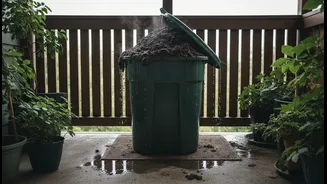










The Monsoon Composting Challenge
You started composting with the best intentions: to reduce waste and create 'black gold' for your plants. But as the humidity rises, especially during the Indian monsoon, your compost bin can turn against you. Instead of an earthy-smelling mix, you get
a foul odor, a swarm of flies, and a slimy, black sludge that looks nothing like the rich fertilizer you were promised. This is a common frustration that leads many to give up. The high moisture in the air combines with the wet kitchen scraps, creating a waterlogged environment. But the rain and humidity are only part of the problem; the real issue often lies in how we are loading our bins.
Why Compacting Is Counterproductive
It feels intuitive to press down the contents of your compost bin to make more space. However, this is one of the worst things you can do, particularly when the air is damp. Successful composting is an aerobic process, meaning it relies on beneficial microorganisms that need oxygen to survive and work their magic. When you compact your compost, you squeeze out the air pockets. This creates an oxygen-starved, or anaerobic, environment. This shift from an aerobic to an anaerobic state is the root cause of most composting problems, from foul smells to a slow, rotting process.
The Science of a Smelly Bin
When deprived of oxygen, the helpful aerobic bacteria die off and are replaced by their anaerobic counterparts. These are the microbes that thrive in stagnant, airless conditions. Instead of breaking down waste cleanly, they cause it to putrefy. This anaerobic decomposition releases hydrogen sulfide, the gas responsible for the classic rotten-egg smell, and other foul-smelling compounds like ammonia. The result is not compost; it's a smelly, fermenting mess that fails to break down properly and can even be harmful to plants if used too soon. The excess moisture, with no air to help it evaporate, turns the bin's contents into a slimy, compacted sludge.
The Right Way: Layer and Keep It Fluffy
The solution is to ensure your compost pile can breathe. Instead of compacting, think about creating a light, airy structure. The key is to balance your 'greens' and 'browns'. 'Greens' are nitrogen-rich, moist materials like kitchen vegetable scraps, coffee grounds, and fresh grass clippings. 'Browns' are carbon-rich, dry materials like dried leaves, shredded newspaper, cardboard, and sawdust. For every layer of wet 'greens' you add, add a generous layer of dry 'browns'. Aim for a ratio of about two parts brown to one part green. This layering technique, sometimes called 'lasagna composting', ensures there's a good mix of materials, prevents the wet ingredients from clumping together, and creates the crucial air pockets needed for aerobic decomposition.
Essential Tips for Humid Months
Managing compost during the monsoon requires a little extra care. First, be extra generous with your 'browns'. It is wise to stockpile dry materials like leaves and cardboard before the rains begin. These materials are essential for absorbing the excess moisture. Second, ensure your bin has good drainage and is protected from direct rain, perhaps with a lid or by placing it under a shelter. Third, turn your compost pile more frequently, if possible. Using a pitchfork or a compost aerator to mix the pile every week or two reintroduces oxygen and breaks up any clumps. This simple act can dramatically speed up decomposition and prevent odors.
Troubleshooting a Soggy Mess
What if your bin is already a wet, stinky disaster? Don't despair; it can be saved. The first step is to stop adding any more wet materials. Next, you need to reintroduce air and carbon. The most effective way is to empty the bin and mix the soggy contents with a large quantity of dry 'browns'—shredded cardboard, dry leaves, or cocopeat are excellent for this. Turn the material thoroughly to break up the slimy clumps and incorporate air. You may need to leave the mix spread out in a sheltered, dry area for a day to help it dry out before returning it to the bin. This intervention will restore the balance and get the aerobic process started again.