







Understanding Mat Pilates
Mat Pilates is a low-impact exercise method that uses your own body weight to build strength, flexibility, and endurance. The practice, developed by Joseph Pilates, revolves around a series of controlled movements designed to strengthen the body's 'powerhouse'
— the deep muscles of the abdomen, back, hips, and pelvic floor. The focus is not on speed and repetition, but on precision, control, and breath. Every exercise, from the classic 'Hundred' to the 'Roll Up', is performed with an emphasis on engaging the deep core muscles, particularly the transverse abdominis, which acts like a natural corset for your spine. This deliberate, mindful approach aims to improve posture, enhance body awareness, and build functional strength from the inside out.
The Case for Mat Pilates
The primary strength of mat Pilates for core fitness lies in its intense focus on stability and control. Unlike traditional ab workouts that often target superficial muscles, Pilates digs deeper to fortify the entire support system of your spine. This makes it exceptionally effective for improving posture and potentially reducing back pain. Because it is low-impact, it's gentle on the joints, making it a sustainable choice for people of all ages and fitness levels, including those recovering from injury. The trade-off for this precision is a slower pace. Those who crave a high-intensity, sweat-drenched workout might find the methodical nature of mat Pilates less engaging. While it tones the body effectively using bodyweight resistance, it's not designed for building significant muscle bulk or providing a high-calorie burn compared to more vigorous workouts.
Understanding Circuit Stations
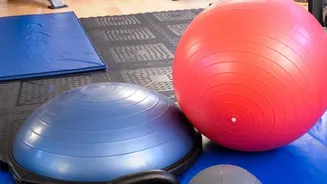
Circuit training is a completely different beast. It involves moving through a series of different exercise 'stations' in quick succession with minimal rest in between. A typical circuit combines strength training exercises (like squats, push-ups, or kettlebell swings) with cardiovascular bursts (like jumping jacks or high knees). The goal is to keep your heart rate elevated for a full-body workout that challenges both your muscles and your cardiovascular system. Core engagement in circuit training is often a component of larger, compound movements. A squat, for example, requires you to brace your core for stability, while a plank station directly targets it. The intensity is high, the pace is fast, and the variety is a key feature.
The Case for Circuit Stations
The biggest advantage of circuit training is its efficiency. It delivers a comprehensive, full-body workout that builds strength and improves cardiovascular health in a short amount of time, typically 30 minutes. This high-intensity format is excellent for burning calories and can be more effective for fat loss goals than lower-intensity workouts. While many circuit exercises engage the core, the focus is broader than in Pilates. Core work is often integrated into full-body movements rather than being the primary, isolated focus. The high-impact nature of some circuit exercises, like jumping, may not be suitable for individuals with joint issues or those new to exercise. Furthermore, the fast pace can sometimes lead to a breakdown in form if not properly supervised, which increases the risk of injury.
The Verdict: Which is Right For You?
Choosing between mat Pilates and circuit stations depends entirely on your personal fitness goals. Choose Mat Pilates if your primary goal is to build deep, foundational core strength, improve your posture, increase flexibility, and enhance your mind-body connection. It's the ideal choice if you prefer low-impact workouts or are looking to build stability to support other athletic pursuits or prevent injury. Choose Circuit Stations if your main objective is overall fitness, including cardiovascular health, calorie burn for weight management, and building strength across your entire body in an efficient, fast-paced format. It's great for those who enjoy variety and high-energy workouts and want their core training integrated into a more dynamic routine.