







The Foundation of Pest Prevention
Pantry pests, such as weevils, flour beetles, and Indian meal moths, are constantly searching for food and a safe place to breed. Cardboard boxes and thin plastic bags that our staples come in offer little resistance to these determined critters. The
core of effective pest control is not about finding a magic repellent, but about creating an environment where pests simply cannot thrive. This involves two main principles: cutting off their food supply and eliminating the cozy habitats they seek. By focusing on fundamental hygiene, you build a fortress that most pests cannot breach, making your pantry an undesirable target for infestation.
Your Best Defence: Airtight Containers
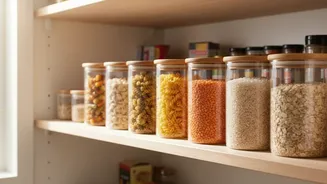
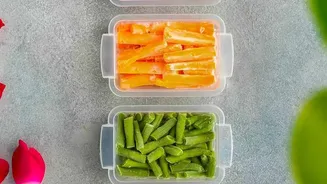
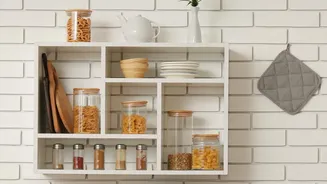
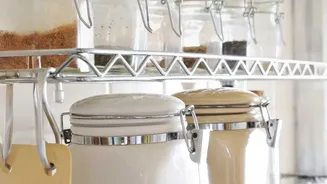
The single most effective step you can take is to transfer dry goods into airtight containers immediately after purchase. Materials like glass, metal, or heavy-duty plastic with locking lids create a physical barrier that pests cannot chew through or squeeze past. This not only protects your food but also contains the smells that attract pests in the first place. It also has a secondary benefit: if a product you bring home from the store is already contaminated with eggs or larvae, the container will quarantine the problem, preventing it from spreading to your other food items. Make it a habit to decant everything from flour, suji, and rice to pasta, cereals, nuts, and even pet food.
Why Viral Hacks Fall Short
You may have seen viral posts recommending placing bay leaves, cloves, or chalk in your pantry to repel bugs. While some natural substances like the eucalyptol in bay leaves can have a mild repellent effect on certain insects, they are not a foolproof solution. Many experts note that while these hacks might deter a few stray pests, they do little to stop a determined infestation and do not address the root cause. Relying on a bay leaf while your flour sits in a paper bag is like locking a screen door while leaving the main door wide open. These methods are best seen as a minor supplement to a strategy built on proper storage and cleaning, rather than a primary line of defence.
The Importance of a Clean, Dry Space
Pests are drawn to spills and crumbs, which can accumulate in the corners of shelves and on the pantry floor. A regular cleaning routine is crucial. At least once a week, sweep or vacuum the pantry floor to remove any stray food particles. Every few months, it's wise to perform a deep clean: empty the shelves completely, vacuum all corners and crevices, and wipe down surfaces with a simple solution of soap and water. It's essential to let the shelves dry completely before restocking, as moisture can attract a different set of pests and encourage mould growth. This regular maintenance eliminates the hidden food sources that allow pest populations to establish themselves.
A Simple Action Plan for a Pest-Free Pantry
Feeling overwhelmed? Here is a straightforward plan to take control of your pantry. First, empty everything out. Inspect each item for signs of pests, such as webbing, small holes in packaging, or the insects themselves, and discard any contaminated food immediately in a sealed bag outside your home. Next, thoroughly clean all shelves, walls, and the floor of your pantry. Once clean and dry, transfer all your dry goods into high-quality airtight containers. Finally, implement a First-In, First-Out (FIFO) system by rotating older products to the front so they get used first. This simple routine ensures your pantry remains a clean, organised, and pest-free zone.