

What Exactly Is Floating Yoga?
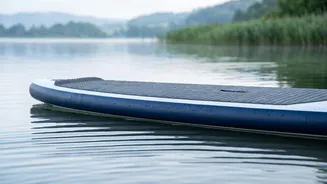
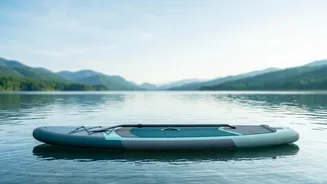
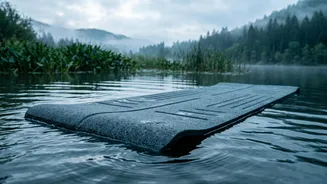
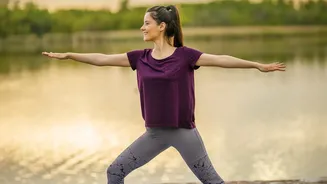
Floating yoga is the practice of performing traditional yoga sequences on a stand-up paddleboard (SUP) while it's in the water, usually in a calm environment like a lake, bay, or swimming pool. The boards are typically wider and more stable than those
used for paddling in waves, designed to provide a suitable platform for movement. The practice combines the physical and mental discipline of yoga with the added elements of being on an unstable surface and outdoors in nature, creating what proponents claim is a unique and enhanced wellness experience.
Claim: A Supercharged Core Workout
The most common claim is that floating yoga provides a superior core workout. The logic seems sound: performing poses on an unstable board forces your body to constantly make micro-adjustments to stay balanced. This requires the engagement of deep core muscles—including the abdominals, obliques, and lower back—that might not be as active during a land-based practice. Essentially, every pose becomes a core-stabilising exercise. The constant need to adapt to the water's movement means your core is working overtime to prevent a splash.
Claim: Deeper Stress Relief and Mindfulness
Advocates often say that taking yoga onto the water amplifies its meditative benefits. The theory is twofold. First, the natural setting enhances the experience. Being outside, with the sky as your ceiling, can feel less confining than a studio. Second, there's the 'blue space' effect. A growing body of research shows that being near, on, or in water can reduce stress, lower the stress hormone cortisol, and promote a state of calm and general happiness. The gentle rocking of the board and the sound of lapping water are said to deepen relaxation and focus, helping to quiet the mind.
What the Evidence Suggests
While there are few, if any, large-scale scientific studies that look specifically at 'floating yoga' as a distinct practice, we can draw strong conclusions by looking at its components. Research on training on unstable surfaces consistently shows it increases the activation of core and stabiliser muscles. So, the claim of a better core workout is well-supported by established principles of exercise science. Similarly, the benefits of yoga for balance, flexibility, and strength are well-documented. The psychological benefits of 'blue space' are also backed by significant evidence, which finds that aquatic environments reduce stress and improve mood. Therefore, it is reasonable to conclude that combining these elements will likely offer the benefits of all three: the physical challenge of yoga, the core engagement from instability, and the mental calm of being on the water.
Improved Proprioception and Balance
Another key benefit is the enhancement of proprioception—your body's awareness of its position in space. Because the board is constantly shifting, your nervous system gets a serious workout, learning to react and adjust instinctively. This improved body awareness and balance control is a skill that translates directly to daily life, potentially reducing the risk of falls and injuries, and improving performance in other sports. Regular yoga practice is already known to improve balance, especially in older adults, and performing it on an unstable surface accelerates that learning curve.
Practical Considerations and Risks
Floating yoga isn't without its challenges. It requires a degree of balance to begin with, and beginners should expect to fall in. While this is often part of the fun, it’s important to be a competent swimmer and practice in a safe, supervised environment. The cost can also be a barrier, as classes often require board rental and specialised instruction. For those with joint issues, the practice can be low-impact, as the water absorbs pressure. However, anyone with significant balance issues, injuries, or mobility concerns should consult a doctor before trying it.