







A Shockwave in the Sky
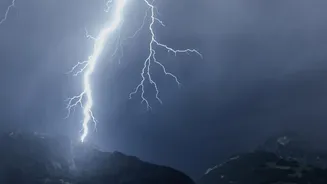
At its heart, the explanation is simple, but the scale is staggering. A bolt of lightning is an intense discharge of electricity. As it travels through the air, it heats a narrow channel of air to temperatures as high as 30,000°C (or 50,000°F). This is about
five times hotter than the surface of the sun. This heating process happens in just a fraction of a second. The air, which is a poor conductor of electricity, has no time to expand smoothly. Instead, it expands explosively outward, creating a powerful shockwave. This shockwave travels through the atmosphere, eventually decaying into the acoustic wave we recognize as thunder. It's not the electricity itself making the noise; it's the air's violent reaction to the lightning's extreme heat.
The Race Between Light and Sound
You always see the lightning before you hear the thunder for a very simple reason: light travels much, much faster than sound. Light from the flash reaches your eyes almost instantaneously, traveling at about 300,000 kilometers per second. Sound, on the other hand, moves through the air at a comparatively leisurely pace of about 340 meters per second. This difference in speed creates a delay that you can use to estimate your distance from the storm. The popular 'flash-to-bang' method is remarkably accurate. Just count the seconds between seeing the lightning and hearing the thunder. Every five seconds of delay represents about one mile of distance (or three seconds for one kilometer). So, a 10-second gap means the lightning strike was approximately two miles away.
The Crack Versus The Rumble
Thunder doesn't always sound the same. Sometimes it's a sharp, sudden crack, and other times it's a long, low rumble. The difference depends on your distance from the lightning and the shape of the lightning channel. A sharp crack usually means the lightning strike was very close. You're hearing the initial, powerful shockwave with little distortion. A long rumble, however, is a more complex acoustic event. Lightning channels can be many miles long and are often branched. The sound you hear as a rumble is the combined noise from different parts of the entire lightning bolt reaching you at slightly different times. Sound from the part of the bolt closest to you arrives first, followed by sound from sections farther away. The rumbling effect is also enhanced by sound waves bouncing off hills, buildings, and even layers of air in the atmosphere.
Decoding Distant Flashes
On a warm summer evening, you might see faint, silent flashes of light on the horizon and call it 'heat lightning'. But 'heat lightning' isn't a special type of lightning at all. What you are actually seeing is regular lightning from a thunderstorm that is simply too far away for you to hear the thunder. Sound waves dissipate over distance, and thunder is rarely audible more than 10 or 15 miles from the strike. The light from that same strike, however, can be seen for 100 miles or more as it reflects off clouds high in the atmosphere. So while the name implies a connection to heat, it's really just a testament to how far light can travel compared to sound.