





Meet SOLVE: Gaganyaan’s Safety Net
Before Indian astronauts, or Vyomanauts, can journey to space, every single moment of their mission must be simulated, tested, and validated. This is where SOLVE comes in. SOLVE, which stands for Sub-Orbital Launch Vehicle for Experiments, is a dedicated
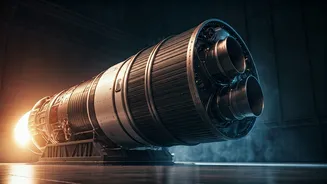
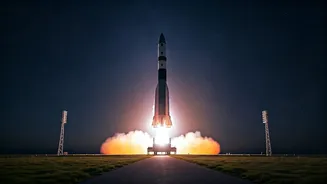
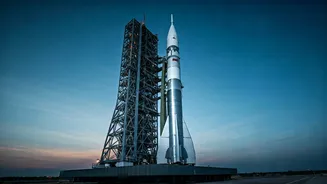
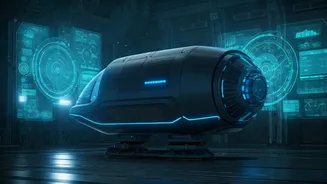
test rocket developed by the Indian Space Research Organisation (ISRO). It isn't designed to go into orbit; its job is arguably even more crucial for the crew. Its primary function is to test the most critical safety system of the Gaganyaan mission: the parachute-based deceleration system for the crew module. In simple terms, SOLVE is a specialized vehicle built to repeatedly test the systems that will bring India's astronauts safely back to Earth.
Simulating a Fiery Return
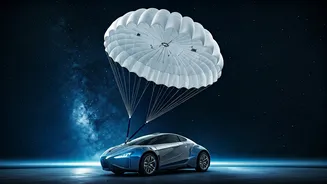
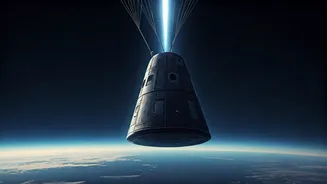
The most perilous part of any human space mission is re-entry and landing. To ensure the Gaganyaan crew module can withstand this phase, ISRO needs to test its recovery systems under realistic conditions. The SOLVE platform will carry a full-scale crew module to an altitude of between 10 and 17 kilometers. At this height, the module will be separated to begin its descent. This triggers a meticulously choreographed sequence of 10 different parachutes, including drogue chutes for stability and main parachutes to slow the craft down, ensuring a gentle splashdown in the sea. Developing a dedicated vehicle like SOLVE gives ISRO the flexibility to conduct these vital tests repeatedly and under various simulated emergency conditions, leaving nothing to chance.
Ingenuity Forged from Experience
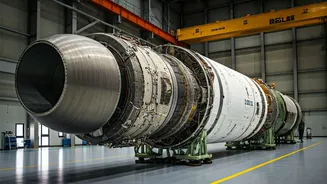
Developing a new launch vehicle from scratch is a monumental task. Instead, ISRO's engineers at the Vikram Sarabhai Space Centre (VSSC), the lead centre for launch vehicle technology, have cleverly adapted existing technology. The solid propulsion stage of SOLVE is derived from the proven strap-on booster motors used in India’s workhorse rocket, the Polar Satellite Launch Vehicle (PSLV). However, it's not a simple copy-paste. Key modifications have been made to meet the unique safety and testing demands of a human-rated mission. These include developing a slow-burning propellant and integrating a new thrust vector control system to precisely steer the vehicle, all tailored to simulate specific aspects of the Gaganyaan flight profile.
A Milestone in Meticulous Preparation
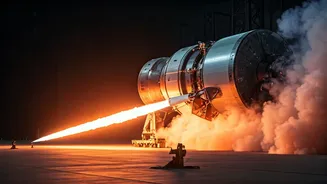
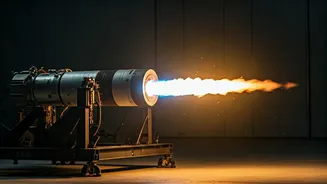
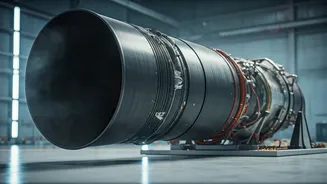
The confidence mentioned in the headline stems from tangible progress. On July 3, 2026, ISRO successfully conducted the first static ground test of SOLVE's solid motor at the Satish Dhawan Space Centre in Sriharikota. In this test, the motor was fired while held firmly to the ground, allowing engineers to measure its performance in detail. The motor performed exactly as predicted, meeting all planned objectives. This successful test is a major milestone, validating the design and manufacturing of the new motor. It confirms that the system is reliable and ready for actual test flights, adding another layer of assurance to the thousands of ground tests already completed for the Gaganyaan program. It's a testament to ISRO's methodical, step-by-step approach to the enormous challenge of human spaceflight.