

What is the PRIMA Mission?
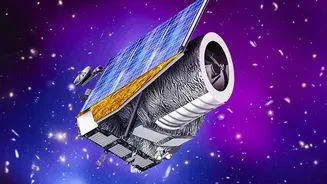
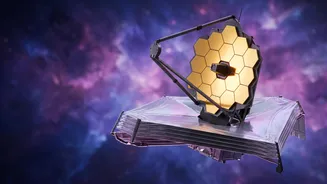
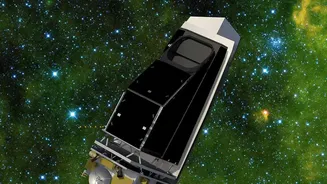
PRIMA is a next-generation space telescope designed to see the universe in a way that other observatories, including the famed James Webb Space Telescope (JWST), cannot. It will survey the cosmos in far-infrared light, a spectrum that is largely invisible
to our eyes and even to many existing telescopes. This special capability will allow scientists to peer through cosmic dust clouds that obscure visible light, giving them an unprecedented view of how stars are born, how galaxies evolve, and how planetary systems form. Nicky Fox, an associate administrator at NASA, described the mission as "humanity's next window into the deep universe," which will help uncover mysteries from the formation of black holes to how water first appeared on Earth. The mission is a collaboration between NASA and several international space agencies, including those from Canada, France, Germany, and Japan.
A New Class of Explorer
The mission marks the first of a new category for NASA called "Probe Explorers." These missions are designed to fill a crucial gap between the agency's smaller, lower-cost Explorer missions and its massive, multi-billion-dollar flagship projects like the JWST. Recommended by the National Academies of Sciences, Engineering, and Medicine, this new class aims to deliver powerful, breakthrough science with a more constrained budget. PRIMA was selected for development over a competing X-ray satellite concept and has a project cost cap of $1.2 billion, not including the launch. This approach allows NASA to pursue targeted, high-impact science without the decade-spanning timelines and immense costs of its largest observatories.
Unpacking 'Phase B' Development
The announcement that PRIMA has entered Phase B is a significant milestone. In NASA's project lifecycle, Phase B is where the preliminary design gets locked in and the necessary technology is finalized. It's the stage where the concept moves from a drawing board idea to a concrete engineering plan. During this phase, the project team completes technology development, builds engineering prototypes, and refines the designs for all the systems and subsystems. This step is crucial for establishing a firm schedule and, most importantly, a reliable cost estimate for the entire project. Before it can move to the next stage, Phase C (implementation), the mission must pass a confirmation review where its technical plans, schedule, and budget are rigorously assessed.
The Science of Seeing in Far-Infrared
PRIMA's power comes from its 5.9-foot telescope and highly sensitive instruments, which will be cryogenically cooled to just a few degrees above absolute zero. This extreme cold is necessary to reduce the telescope's own heat, which would otherwise blind its far-infrared detectors. By operating at these wavelengths, PRIMA will be able to address fundamental questions that other telescopes can't. For example, it will quantify the role of water in the formation of planets and measure the composition of the disks where new worlds are born. It will also trace how galaxies and their central supermassive black holes have grown together over cosmic history and map the buildup of cosmic dust and heavy elements. In essence, it will help create a more complete picture of why the universe looks the way it does today.
The Road to a 2033 Launch
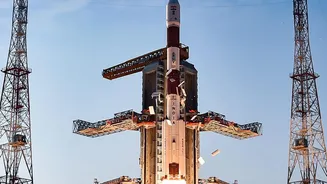
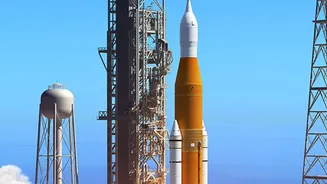
While the 2033 target launch date may seem distant, it reflects the complex and methodical process of building a cutting-edge space observatory. With the move into Phase B, the detailed design and technology maturation process is now formally underway. Following the successful completion of this phase and its confirmation review, the mission will enter Phase C, which includes instrument delivery from international partners, expected around 2029. If all milestones are met, the observatory will be prepared for a launch in 2033, embarking on a planned five-year mission to survey the sky. Each step is a carefully managed part of ensuring that when PRIMA finally opens its eyes to the universe, it is ready to deliver transformational science.