



The Absence of Light Pollution
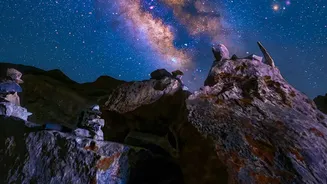
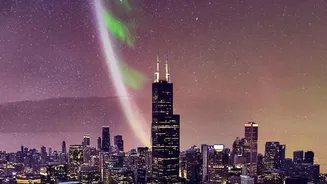
The single most important factor for quality stargazing is the absence of artificial light. Light from cities, towns, and industrial areas creates a phenomenon known as 'skyglow', a luminous dome that washes out all but the brightest celestial objects.
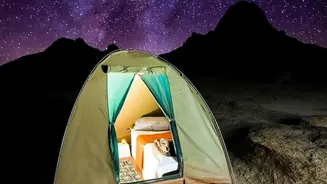
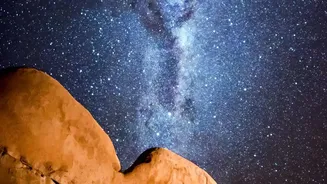
More than 80% of the world's population lives under light-polluted skies, making the sight of the Milky Way a rare treat. To quantify this, astronomers often use the Bortle Scale, a nine-level system where Class 1 represents a pristine, excellent dark sky and Class 9 is an inner-city sky where only the Moon and a few planets are visible. True dark-sky destinations are far removed from major population centres, offering natural darkness that allows faint stars, nebulae, and distant galaxies to emerge.
Clear and Stable Atmosphere
A dark location is only as good as the sky above it. Atmospheric conditions play a crucial role. Frequent cloud cover can obviously ruin a stargazing trip. Beyond just clouds, factors like humidity, dust, and smoke particles in the air can scatter what little light exists and reduce clarity. Astronomers refer to atmospheric stability as 'seeing'. Poor seeing causes stars to twinkle excessively, blurring details on planets and the Moon when viewed through a telescope. The ideal stargazing spot has a dry climate and clean air, which lead to better transparency and stability, providing a sharp, steady view of the cosmos. This is why many world-class observatories are located in deserts or on remote mountaintops.
The Advantage of High Altitude
Going up in elevation can dramatically improve the view. Higher altitudes mean there is less air between you and the stars. This thinner atmosphere reduces the amount of distortion and scattering, resulting in a clearer and darker sky. Mountainous regions are often excellent for stargazing not just because they are typically remote and less populated, but also because they physically lift you above a significant portion of the densest, most turbulent layers of the atmosphere. This elevation gain helps to minimize the effects of both light pollution from distant towns and natural atmospheric haze.
Accessibility and a Clear Horizon
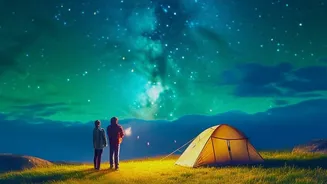
The darkest place on Earth is useless for tourism if no one can safely get there. A suitable dark-sky destination requires practical accessibility, such as safe roads and designated viewing areas. Furthermore, the landscape itself is a key consideration. A spot with wide-open, unobstructed views of the horizon is far superior to one deep in a forest or a narrow canyon. An open landscape allows for sweeping panoramic views of the sky and ensures that celestial events near the horizon, like a rising Milky Way or a meteor shower, are not blocked by trees or mountains.
Dedicated Conservation Efforts
The rise of astrotourism is driven by a conscious effort to protect the night. Many of the world's best stargazing spots are officially recognized by organisations like DarkSky International. These certified 'Dark Sky Parks', 'Reserves', and 'Sanctuaries' are areas where local communities, governments, and park authorities have made a formal commitment to preserving the natural night. This involves implementing smart lighting policies, such as using shielded fixtures that direct light downwards, using warmer-coloured bulbs, and turning lights off when not needed. These designations not only protect the environment but also support local economies through sustainable tourism and provide educational outreach to the public about the importance of dark skies.