





The Problem with Perfect Spheres
For decades, scientists planning for the unlikely but catastrophic event of an asteroid collision have faced a major computational hurdle. To make the mathematics manageable, simulations often treated asteroids as perfect spheres. The problem, as Sandia
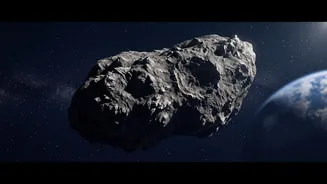
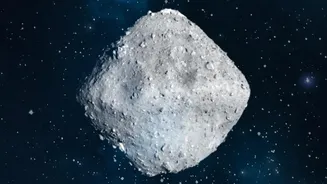
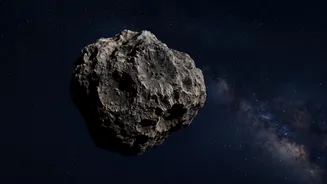
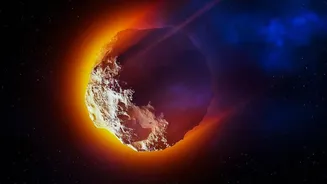
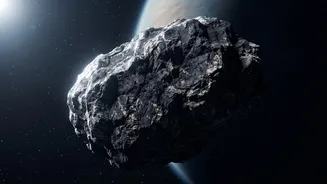
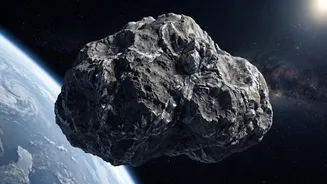
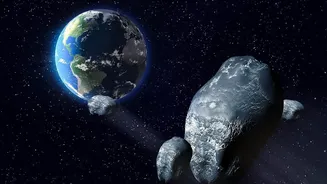
physicist Nathan Moore notes, is that 'spherical asteroids don't exist'. Real asteroids are lumpy, irregular, and complex. This simplification was a necessary evil; the processing power required to model a realistic, craggy asteroid's reaction to a deflection attempt, such as a nuclear blast, was immense. Running even a single, high-fidelity simulation could be prohibitively slow, hampering the ability of researchers to test multiple scenarios and strategies.
A Breakthrough by Combining Codes
The new algorithm, developed by Moore and his team, cleverly overcomes this challenge by combining two of Sandia's existing high-fidelity codes. The 'ALEGRA' code excels at modeling the intense, high-energy physics of matter being heated by radiation, like the surface of an asteroid being vaporized by an X-ray blast. The 'SPARTA' code is designed to simulate the behavior of low-density gases, like the cloud of debris that would expand away from the asteroid. By figuring out how to make these two specialized programs work together, the team created a model that captures the full picture with unprecedented speed and accuracy, eliminating the need to choose between realistic shapes and high-fidelity math.
Why Speed Is a Game-Changer
A 1,600-fold increase in calculation speed means researchers can move beyond single, simplified scenarios. They can now run thousands of simulations to see how an irregularly shaped asteroid would react to a deflection attempt from every conceivable angle. The results have been stunning. The simulations, published in the journal Icarus, showed that where you target an asteroid matters immensely. For one simulated asteroid, hitting it from one side produced a deflection velocity nearly five times greater than hitting it from another. For a different asteroid, the resulting spin, or rotational speed, varied by a factor of 17 depending on the angle of the blast. As Moore stated, 'We expected aim to matter. What surprised us was how much'.
From Theory to Practical Defense
This new capability transforms planetary defense from a purely theoretical exercise into a practical one. With this algorithm, scientists could take high_resolution 3D images of a threatening asteroid from a spacecraft flyby and quickly run simulations to find the optimal point of impact. The model can generate a heat map of the surface, calculate the resulting push and spin, and even predict the breakup of surface rocks. This is crucial because the goal is to gently nudge an asteroid off course, not shatter it into multiple, still_dangerous fragments. While the model can't yet predict the breakup of the entire asteroid body, it provides a powerful tool to maximize the chances of a successful deflection mission.