





The Post-Monsoon Advantage
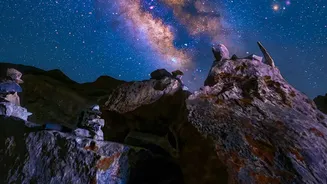
The period from October to May marks the prime season for stargazing around Mumbai. After months of rain, the atmosphere is largely free of dust and pollutants, resulting in significantly clearer and more transparent skies. The lower humidity of the winter
months further enhances visibility, making celestial objects appear sharper and brighter. This post-monsoon clarity is a gift to amateur astronomers and casual observers alike, transforming the night sky into a breathtaking canvas that is obscured for much of the year. This seasonal shift provides the ideal opportunity to plan a night away from the city to witness the universe in its full glory.
Escaping Mumbai's Light Pollution
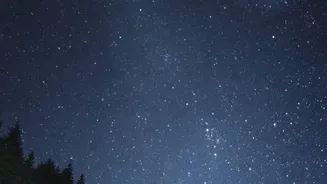
Mumbai is one of India's most light-polluted cities, with the urban skyglow ranking as a Bortle Class 8 to 9. This means that on a typical night, only the moon, planets, and a few of the brightest stars are visible from within the city. The vast majority of stars and the faint, milky band of our own galaxy are completely washed out by the glare of streetlights, buildings, and advertising billboards. To truly experience a star-filled sky, one must travel at least 100 to 150 kilometres away, where the Sahyadri range helps to block the city's glow and the sky darkness improves dramatically.
Top Dark-Sky Destinations Near Mumbai
Several locations in the Sahyadri foothills offer excellent conditions for stargazing. Bhandardara, about 165 km from Mumbai, is a premier spot, known for its dark skies and the serene setting of Wilson Dam. On a clear, moonless night here, the Milky Way is often visible to the naked eye. Mahuli and Dehene villages, both closer to the city and accessible from Asangaon, are also popular choices. These areas provide wide, open spaces perfect for setting up telescopes or simply lying back and watching the sky. Other notable spots include Jawhar, Malshej Ghat, and areas around Pawna Lake, all of which provide a significant escape from urban light pollution.
What to See in the October Sky
October 2026 offers several celestial highlights. Saturn will be at opposition on October 4th, meaning it will be at its closest and brightest for the year, visible all night long. This is the best time to view its famous rings through a telescope. The New Moon on October 10th provides the darkest possible skies, perfect for spotting faint objects like the Andromeda Galaxy (M31), our closest galactic neighbour, which will be high overhead. While the Orionid meteor shower peaks around October 21-22, a bright moon will likely interfere with viewing the fainter shooting stars.
Your First Stargazing Trip: A Checklist
A successful stargazing trip requires a little preparation. First, plan your outing around the New Moon for the darkest skies. Download a stargazing app like Stellarium or SkyView to help identify constellations and planets. You don't need an expensive telescope to start; a good pair of binoculars can reveal craters on the moon, Jupiter's moons, and brighter star clusters. Dress in warm layers, as nights can get chilly even in temperate weather. Pack a comfortable mat or chair, some snacks, and a torch with a red light filter, as red light helps preserve your night vision. Most importantly, allow your eyes at least 20-30 minutes to fully adapt to the darkness.
Guided Stargazing Tours
For those new to astronomy, joining a guided tour can greatly enhance the experience. Several local groups, such as Stargazing Mumbai and Horizon Astronomical Society, organize regular events at dark-sky locations like Mahuli, Dehene, and Bhandardara. These sessions are led by experienced astronomers who provide high-end telescopes and share their knowledge about the cosmos, pointing out planets, distant galaxies, and nebulae. These tours often include transportation, meals, and even camping arrangements, making them a hassle-free way to dive into the world of observational astronomy.