






From Humble Homes to Public Spectacles
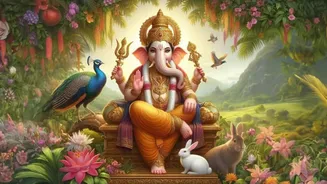
Before it became the grand public festival we know today, Ganesh Chaturthi was a quiet, intimate affair. For centuries, families across Maharashtra and other parts of India worshipped small, handcrafted clay idols within their homes. The celebration was deeply
personal, centred on household worship and family togetherness. The shift towards large-scale public celebrations was a relatively recent development, spearheaded by the freedom fighter Bal Gangadhar Tilak in 1893. His goal was not to promote larger idols but to unite people across castes and communities against British colonial rule, using the festival as a common platform for nationalist expression.
Tilak’s Vision: Unity, Not Size
Lokmanya Tilak saw the potential of Ganesh Chaturthi to bypass British restrictions on public assembly. By transforming a religious festival into a 'Sarvajanik Ganeshotsav' or public festival, he created a space for social and political discourse under the guise of celebration. The emphasis was on fostering a collective identity, organizing cultural programs, and promoting nationalist ideas. The 'mandal' culture he initiated was about community participation and shared devotion. The size of the idol was secondary to the goal of bringing people together to strengthen the fabric of society and the freedom movement.
The Spiritual Heart: Pranapratishtha
The most crucial ritual of Ganesh Chaturthi is 'Pranapratishtha', a Sanskrit term meaning 'to establish life force'. This ceremony involves chanting mantras to invoke the divine presence of Lord Ganesha into the physical idol, or 'murti'. According to tradition, it is this ritual that transforms a simple clay or stone figure into a revered deity capable of receiving prayers. This core belief underscores that the material form, regardless of its size, is merely a temporary vessel for the formless, omnipresent divine energy. Devotion and faith are what make the idol sacred, not its height or grandeur. A small idol worshipped with sincere belief holds the same spiritual power as a colossal one.
Visarjan: A Lesson in Impermanence
The final ritual of the festival is 'Visarjan', the immersion of the idol in water. This act carries profound philosophical meaning, symbolizing the cycle of creation and dissolution. It serves as a reminder that everything in the physical world is transient. The form returns to the formless, and the clay goes back to the elements from which it came. This tradition beautifully illustrates the Hindu concept of detachment and the understanding that the divine is ultimately beyond any physical form. The focus on a temporary idol reinforces the idea that what truly matters is the spiritual connection, not the physical object itself.
Modern Trends and a Return to Roots
In recent decades, the festival has seen a trend of competitive pandals and increasingly massive idols, often made from non-biodegradable Plaster of Paris (PoP). This has led to significant environmental concerns, as PoP and chemical paints pollute water bodies after immersion, harming aquatic life. In response, a growing movement is advocating for a return to the festival's roots: using smaller, eco-friendly idols made from natural clay ('shadu mati'). This shift aligns perfectly with the original traditions, which emphasized humility, environmental harmony, and devotion over spectacle. Choosing an eco-friendly idol is not just a modern, responsible choice but also a step closer to the festival's authentic spirit.