







The Silent Drain on Our Resources
In a nation grappling with significant water stress, the daily overflow from millions of water tanks represents a staggering loss. While it may seem like a minor issue at the household level, the cumulative effect is enormous. Studies and observations
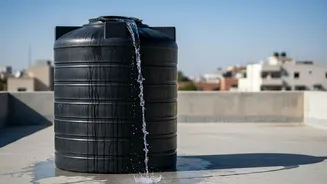
across various Indian cities reveal a concerning pattern. A single tank overflowing for just thirty minutes can waste as much as 500 litres of water. In larger apartment complexes, where high-capacity motors are used, one case study found that unchecked overflows led to a wastage of 1.5 million litres and an additional expense of ₹1.5 lakh on water and electricity in a single month. This isn't just about losing water; it's about squandering a precious resource that over 600 million Indians struggle to access reliably. The problem is often hidden in plain sight, happening on rooftops and going unnoticed until the damage is done.
Why Our Taps (and Tanks) Keep Running
The reasons behind overflowing tanks are typically straightforward and preventable. The most common cause is simple human error. In homes where water pumps are operated manually, it is easy to get distracted and forget to switch off the motor in time. This is especially true with inconsistent municipal water supply schedules, which encourage a 'just-in-case' approach to running the pump. The second major culprit is faulty equipment. A broken or poorly maintained float valve—the mechanism designed to automatically stop the inflow of water—is a frequent cause of failure. Over time, these mechanical parts can wear out or get blocked by debris, rendering them useless. Without a reliable shut-off mechanism or real-time monitoring, tanks are destined to overflow, perpetuating a cycle of waste.
The Ripple Effect of Wasted Water
The consequences of an overflowing tank extend far beyond the loss of water itself. Firstly, there is the direct financial cost. Wasted water translates to higher utility bills, and the unnecessary runtime of the motor consumes more electricity. For residential societies that rely on water tankers to supplement their supply, every litre lost to overflow is a litre they may have to purchase later, creating a costly and ironic cycle of waste and expenditure. Secondly, there is the physical damage to property. Constant dampness from overflows can weaken a building's structure, leading to seepage, peeling paint, and the growth of mould and algae. This not only results in expensive repairs but can also pose health risks to residents. Finally, the extended and unnecessary operation puts additional strain on the water pump, shortening its lifespan and leading to premature failure.
Simple, Low-Cost Overflow Alarms
For households looking for an immediate and affordable fix, a water tank overflow alarm is an excellent starting point. These simple devices are widely available and can cost as little as ₹300 to ₹500. They work by placing sensors at the desired maximum water level in the tank. When the water touches the sensors, it completes an electrical circuit and triggers a loud alarm. Many modern alarms feature a human voice alert, often in both English and Hindi, that clearly instructs someone to turn off the motor. Installation is typically a simple plug-and-play process, requiring no special tools or technical expertise. While it still requires someone to manually switch off the pump, the audible alert eliminates the forgetfulness factor, making it a highly effective tool for water conservation.
The Smart Solution: Automatic Controllers
For those seeking a more hands-off and comprehensive solution, an automatic water level controller is the ideal upgrade. These smart devices, with prices starting from around ₹800, manage the entire water supply system for you. An automatic controller uses sensors in both the overhead tank and the underground sump or main water source. It constantly monitors the water levels and automatically switches the pump on when the tank is running low and, crucially, switches it off the moment it is full. This completely eliminates the risk of overflow and ensures the tank is always adequately filled. Furthermore, many controllers come with 'dry run protection', a feature that prevents the motor from running when the sump is empty, thereby protecting it from burnout. Investing in an automatic controller not only saves water and electricity but also extends the life of your pump, offering significant long-term savings and peace of mind.