


A Clock Made of Gas
At the heart of this discovery is a powerful technique called Argon-Argon (Ar-Ar) dating. Think of it as a highly advanced geological clock. Many rocks contain the element potassium, and a tiny, naturally occurring fraction of it is a radioactive isotope
called potassium-40. Over immense timescales, this potassium-40 slowly decays, transforming into argon-40, an inert gas. When a rock is molten, like lava or the material that formed asteroids, this argon gas simply escapes. But once the rock cools and solidifies, the argon gets trapped inside its mineral structure. The clock starts ticking. Scientists can measure the amount of trapped argon-40 relative to the amount of potassium-40 to calculate how long the rock has been solid. The Argon-Argon method refines this by using a nuclear reactor to convert a stable form of potassium into argon-39. By measuring the ratio of the two argon isotopes in a single, tiny sample, scientists can achieve incredible precision, dating events that happened just a few thousand years ago or, in this case, billions of years ago.
Why Space Rocks Are So Special
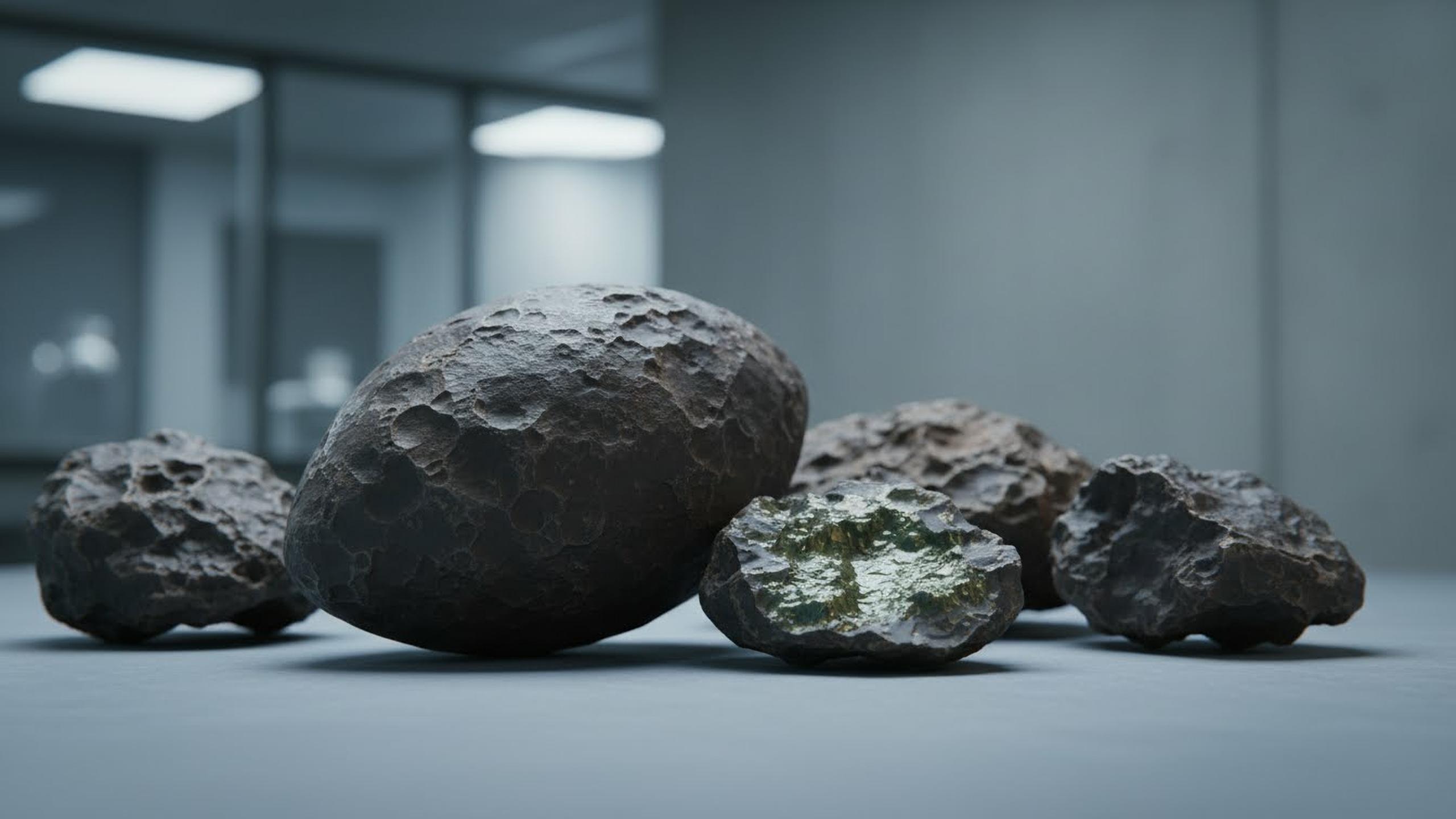
Why go to all this trouble for a few rock fragments? Because these aren't just any rocks. Most are meteorites, remnants from the asteroid belt that have journeyed through space to land on Earth. Unlike our own planet, which is a dynamic and geologically active world, meteorites are essentially pristine time capsules. Earth's rock cycle constantly melts, erodes, and transforms its surface, effectively erasing the record of its earliest days. The oldest rocks found on Earth are around 4 billion years old, but the planet itself is much older. Meteorites, however, have largely remained unchanged since they first solidified from the dust and gas that formed our solar system. They are physical relics of the planet-formation era, giving us direct access to the building blocks of worlds like our own. Studying them is the closest we can get to holding a piece of the early solar system in our hands.
A Story of Cosmic Violence
The analysis of a recent batch of these meteorite fragments tells a story of a violent and chaotic past. By using Argon-Argon dating on dozens of fragments believed to have originated from a single parent body, scientists can reconstruct a timeline of major events. For example, the primary age of the fragments might date back over 4.5 billion years, confirming their origin at the dawn of the solar system. But the analysis can also reveal younger dates. If some samples show evidence of being intensely heated and reset at, say, 4.1 billion years ago, it points to a catastrophic event, most likely a massive collision in the asteroid belt. This is not just a random date; it helps populate a timeline of the solar system's turbulent youth, a period when planet-sized objects crashed into each other and reshaped the architecture of our cosmic neighbourhood. These dates act as crucial data points in models of how and when the planets settled into their modern orbits.
Building a Better History of Our Solar System
Each new, precisely dated event adds another brushstroke to our grand picture of solar system evolution. Knowing exactly when major impacts occurred helps us understand the environment in which the planets, including Earth, were growing. Was our young planet bombarded by a constant stream of asteroids, or did the impacts come in intense, short-lived storms? Did these impacts deliver key ingredients for life, like water and organic molecules, to Earth's surface? The ages locked inside these meteorites provide the ground truth needed to test these theories. As researchers date more fragments from different parent asteroids, they can begin to map out the history of specific regions of the solar system, distinguishing between material that formed closer to the sun and material from the colder, outer reaches. This helps explain why planets like Earth and Mars are rocky, while Jupiter and Saturn are gas giants.