




A Gateway to the Roof of the World
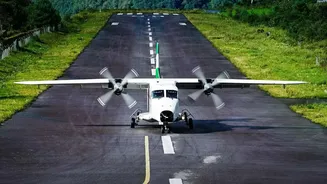
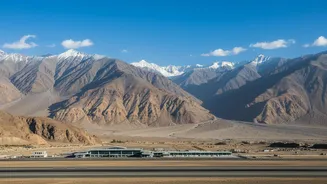
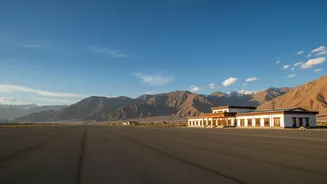
Kushok Bakula Rimpochee Airport in Leh, situated at an altitude of 3,256 meters (10,682 feet), holds the distinction of being India's highest commercial airport. For travellers, it offers one of the most scenic and challenging landing approaches in the world,
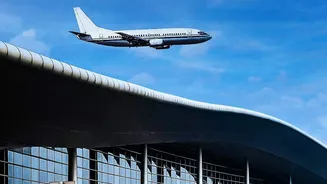
flanked by the majestic Himalayas. But beyond its breathtaking location, the airport is a strategic lifeline for the Ladakh region, supporting tourism, local communities, and significant military movements. As tourism to the region has surged and its strategic importance has grown, the existing infrastructure has been stretched to its limits, handling passenger flows far beyond its original design capacity. This has necessitated a forward-looking expansion to meet the demands of the future.
Inside the State-of-the-Art Terminal
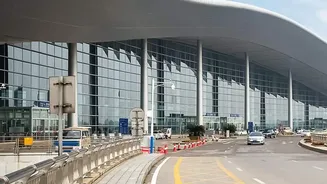
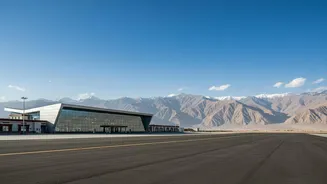
The centerpiece of this ambitious expansion is a new, multi-level integrated terminal building. Constructed by the Airports Authority of India (AAI) at an estimated cost of around ₹640 crore, the project is a significant infrastructural leap. Spread across approximately 19,000 square meters, the new terminal is designed to handle a massive increase in traffic, with a projected capacity of up to 3.5 million passengers annually. This is a dramatic increase from the current capacity. Inside, passengers will find modern amenities including 18 to 20 check-in counters, an in-line baggage handling system, two arrival carousels, and numerous lifts and escalators for smooth transit. The design is not just about function; it deeply incorporates local culture, with architectural elements reflecting Buddhist philosophy and Ladakhi heritage, giving travellers an authentic sense of place from the moment they arrive.
Engineering Marvels at High Altitude
Constructing a large, modern facility in Leh's extreme climate presents unique engineering challenges. With temperatures dropping severely in winter, work is often restricted to just six months of the year. To combat the harsh weather, the terminal is equipped with a centralized heating and air-conditioning system. In a pioneering move for Indian aviation, the building will be the country's first airport to utilize a hybrid geothermal and solar power system. A large-scale geothermal system will provide heating and cooling, drawing energy from deep underground, while a substantial rooftop solar power system will generate electricity. This sustainable approach will significantly reduce the airport's carbon footprint and dependence on conventional energy in an ecologically sensitive zone.
Boosting Tourism and Strategic Capabilities
The new terminal is set to be a game-changer for Ladakh. Officials expect the airport's operational capacity to triple, eventually handling up to 54 flights per day, compared to the current 18. This will be facilitated in two phases, with the second phase involving the demolition of the old terminal to make way for additional aircraft bays and aerobridges. This enhanced connectivity is expected to provide a major boost to tourism, the backbone of the local economy. Beyond tourism, the expansion holds immense strategic significance. An upgraded airport with higher capacity and night-landing capabilities strengthens the nation's ability to support military logistics and troop movement in this critical border region. The project is seen as a vital step in strengthening regional development and national security.
Timeline and Future Outlook
The foundation stone for the project was laid in early 2019. After some delays, construction has progressed rapidly, with officials reporting in mid-2026 that the project was over 80% complete. The latest timelines suggest the new terminal is expected to be completed and become operational by August 2026. Once the new terminal is fully operational, the old building will be demolished to complete the final phase of apron and bay expansion. This ambitious project is not just about building a bigger airport; it's about creating a modern, sustainable, and resilient hub that will serve Ladakh's growing needs for decades to come, solidifying its connection to the rest of the country and the world.