




The Decade-Long Plan
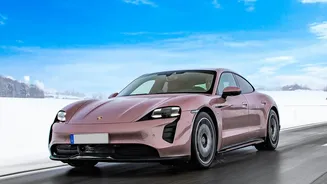
Porsche has announced a significant restructuring that will see its workforce reduced by approximately 9,000 jobs, or about one-fifth of its total staff, by 2035. This move was finalized in July 2026 after extensive negotiations between management and
labor representatives. Crucially, the company has committed to avoiding compulsory redundancies. Instead, the reduction will be managed through socially responsible measures, including natural attrition, voluntary severance packages, and expanded early and partial retirement programs. This long-term agreement provides a lengthy runway for the transition, extending employment and site protections for its German factories in Zuffenhausen and Weissach through 2035. The total number of reductions includes a previously announced plan for around 4,000 job cuts, which this new agreement significantly expands upon.
Pivoting from Pistons to Software
This workforce overhaul is a direct response to the immense pressures reshaping the global auto industry. Porsche is navigating a challenging environment marked by slowing sales in its once-booming Chinese market, stiffer competition, and the capital-intensive shift to electric vehicles (EVs). The company has acknowledged that its electrification strategy has stalled and needs an overhaul. Assembling an electric car requires fewer traditional manufacturing steps and, consequently, fewer workers than a conventional combustion engine vehicle. This fundamental shift means that while jobs tied to legacy engine technology are phased out, Porsche is simultaneously investing in its future. The company plans to spend over 2 billion euros on its main German sites to retool for future vehicle production and development, focusing on the skills needed for a new automotive era.
A Calculated Transition
Porsche's strategy is not just about cutting jobs, but fundamentally changing the composition of its workforce. The roles being phased out are largely in traditional manufacturing and administration. At the same time, the company is actively hiring and retraining for the future of mobility. The focus is now on recruiting experts in software development, artificial intelligence, battery technology, and digital services. This reflects a broader industry trend where the modern car is increasingly defined by its software and connectivity, not just its mechanical performance. The gradual, decade-long nature of the plan allows Porsche to manage this delicate balancing act: gracefully reducing its reliance on old-world expertise while ramping up its capabilities in the high-tech skills that will define the next generation of luxury sports cars.
Germany's Automotive Overhaul
Porsche is not undertaking this transformation in a vacuum. Its parent company, Volkswagen, is pursuing its own massive cost-cutting and restructuring efforts. Across Germany, iconic automakers like Mercedes-Benz and BMW are implementing similar strategies to contend with the same powerful headwinds. The entire German auto industry, long the engine of the country's economy, faces the dual threat of the complex EV transition and the rapid rise of competitive Chinese brands. Studies have warned that the shift to electric mobility could lead to significant job losses across the sector, particularly among suppliers tied to the combustion engine. Porsche's long-term plan, secured in partnership with its powerful works council, is a case study in how one of the world's most storied brands is attempting to navigate this historic disruption without causing massive social upheaval.