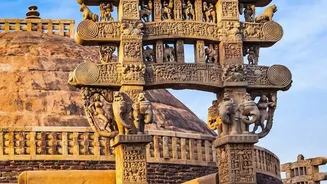









A Glimpse Into Sirpur's Past
Located on the banks of the Mahanadi river, Sirpur was a thriving capital city known as 'Shripur' during the 5th to 8th centuries. It flourished under the Panduvanshi dynasty, becoming a major centre for trade, religion, and culture. What makes Sirpur truly
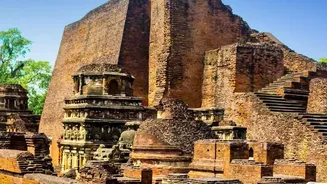
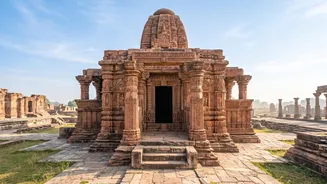
remarkable is the harmonious coexistence of multiple faiths. Archaeological excavations, which began in earnest only in the 21st century, have unearthed a stunning array of structures: Hindu temples dedicated to Shiva and Vishnu, extensive Buddhist monasteries (viharas), and Jain shrines. The Chinese traveller Xuanzang, who visited in the 7th century, described a vibrant Buddhist community with around 100 monasteries. The site's signature monument is the Lakshmana Temple, a 7th-century structure celebrated as one of India's finest examples of brick temple architecture. This rich, multi-layered history, where different religions thrived side-by-side, is central to its claim of 'Outstanding Universal Value'.
The First Step on a Long Journey
Being added to the tentative list is not the final destination, but the crucial first step. This list is essentially an inventory of sites that a country believes have the potential for World Heritage status and intends to nominate in the future. A site must be on the tentative list for at least a year before the formal nomination process can even begin. The Archaeological Survey of India (ASI) and other state bodies will now need to prepare an exhaustive dossier. This document must meticulously detail Sirpur's historical significance, justify its universal value, and outline a comprehensive plan for its long-term management and conservation. This dossier is then submitted to the World Heritage Committee for evaluation by advisory bodies like ICOMOS (International Council on Monuments and Sites). It's a rigorous and lengthy process, but inclusion on the tentative list signals a formal recognition of Sirpur's potential on a global stage.
A Spotlight for Tourism and Economy
For a site as historically significant but relatively under-the-radar as Sirpur, a UNESCO association can be transformative. The tentative listing alone acts as a powerful catalyst for awareness. It puts Sirpur on the map for heritage enthusiasts, academics, and curious travellers, both domestic and international. An increase in visibility often translates directly into a tourism boost. This can have a ripple effect on the local economy in Mahasamund district, creating opportunities for guides, hospitality services, and artisans. The 'UNESCO brand' lends a site a certain prestige and credibility, encouraging more people to explore beyond the usual tourist circuits. As awareness grows, so does the potential for sustainable tourism models that celebrate and protect the area's unique legacy.
Enhancing Conservation and Research
The journey toward a World Heritage inscription is as much about protection as it is about prestige. The nomination process itself forces a higher standard of conservation. The required management plan ensures that authorities have a clear roadmap for preserving the site's integrity against threats like environmental decay and unchecked urbanisation. Furthermore, the global attention can attract funding and expertise for continued archaeological work. Much of Sirpur was hidden for centuries and has only been systematically excavated recently. The promise of a UNESCO tag can unlock new avenues for research, helping experts piece together a more complete picture of this ancient metropolis. It reinforces the idea that these are not just ruins, but a living laboratory for understanding India's past.
Navigating the Challenges Ahead
While the potential benefits are immense, the path forward is not without its challenges. The primary hurdle is the immense effort required to compile a successful nomination dossier. It is a resource-intensive task that can take years. Beyond the paperwork, there is the significant challenge of managing increased visitor numbers. Overtourism can place a severe strain on a site's fragile structures and the surrounding environment if not handled proactively. A successful management plan must anticipate this, implementing measures like controlled access, robust visitor infrastructure, and community engagement to ensure that tourism remains a positive force. Balancing the needs of conservation with the opportunities of tourism will be the key to securing Sirpur's future and realising the full potential of this historic recognition.