




The End of Endless Options
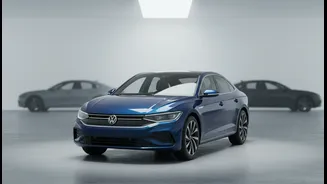
The Volkswagen Group has announced a dramatic new strategy that will significantly simplify its vast global portfolio. Under a new initiative called the "Future Plan," the company intends to reduce its model lineup by as much as 50% and cut the complexity
of equipment combinations by up to 75% by 2030. For decades, VW built its empire on a sprawling variety of models, engines, and trims across its many brands, including Volkswagen, Audi, and Skoda. This approach created immense complexity in engineering, manufacturing, and sales. Now, the German auto giant is pivoting away from this volume-driven approach to focus on profitability, efficiency, and the most attractive market segments. For customers, this signals a fundamental change: the era of seemingly infinite choice is coming to a close.
Why Simplicity Is the New Strategy
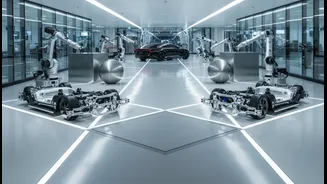
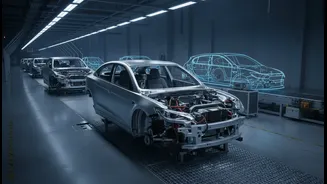
This radical simplification is driven by several powerful forces. A key factor is the intense pressure to cut costs and boost profitability. The company faces rising manufacturing costs, slowing demand in key markets like China, and fierce competition from new electric vehicle (EV) makers. The old strategy of offering niche variants for every possible buyer has become a costly burden, complicating supply chains and slowing down production. By streamlining its offerings, Volkswagen aims to improve factory efficiency, reduce development costs, and speed up the time it takes to bring new cars to market. The plan is part of a broader effort to make the company more resilient and competitive in a rapidly changing and volatile global automotive landscape.
The Electric Future Demands Focus
A major catalyst for this new direction is the industry's massive and expensive shift to electric vehicles. Developing new EV platforms, battery technology, and software requires enormous investment. By trimming the fat from its traditional internal combustion engine (ICE) portfolio, Volkswagen can free up critical financial and engineering resources to pour into its electric future. This focus is essential for competing with both legacy automakers and agile EV-native brands. Essentially, every euro spent developing a low-volume coupe or an obscure engine variant is a euro not spent on the next generation of ID electric models. The company is making a calculated bet that its future success lies in leading the EV transition, not in maintaining a complex ICE lineup.
What's on the Chopping Block?
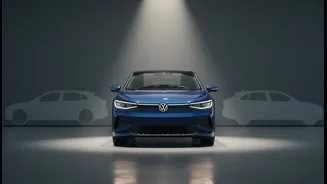
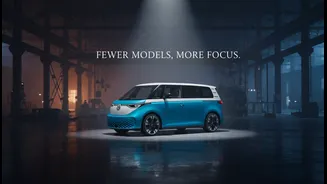
While Volkswagen has not officially confirmed which specific models or variants will be discontinued, the strategy provides clear clues. The cuts will likely target slow-selling or low-margin vehicles. Industry analysts expect that niche models, such as coupes or convertibles based on mainstream cars, overlapping SUVs within the VW Group's various brands, and aging ICE models nearing the end of their life cycle are prime candidates for retirement. For remaining models, the biggest change will be the drastic reduction in configuration options. This means fewer engine and gearbox pairings, a smaller selection of trim levels, and more standardised equipment packages instead of long lists of individual options. For example, the upcoming ID.7 already has 99 percent fewer configuration options compared to a previous-generation Golf.
Impact on the Indian Market
While the restructuring is a global plan, its effects will ripple through to India. Volkswagen has previously highlighted India as a key growth region. However, the push for global efficiency and platform harmonisation will almost certainly influence future offerings here. We may see a more focused lineup for models like the Virtus and Taigun, with fewer, more distinct variants that cater to the most popular customer preferences. This could simplify the buying process for customers. The focus on core, high-volume models could also mean that more niche, globally-axed products, which may have previously been considered for India, will not be introduced. The overarching goal for VW is to concentrate investment on products and technologies that deliver the most value, a principle that will apply to its strategy in India as much as anywhere else.