





A Surprising Snowfall Surge
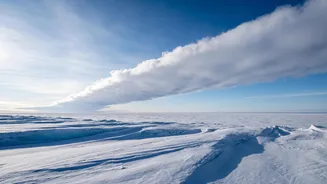
Between 2021 and 2023, the Antarctic Ice Sheet gained an astonishing 695 billion tons of mass, primarily due to extreme snowfall over the eastern part of the continent. This finding, published in the journal Nature, temporarily reversed Antarctica's long-term
trend of losing ice. For the past two decades, the continent has been losing ice at an average rate of about 140.5 billion tons per year. This sudden gain was the largest short-term increase ever recorded by the GRACE satellites, which have been monitoring the continent's mass since 2002. The key driver was not colder temperatures, but a complex atmospheric connection to warmer waters thousands of miles away.
The Tropical Connection
The study reveals a fascinating link between the tropics and the South Pole. Sustained warming in a patch of the tropical ocean, where the Pacific and Indian Oceans meet, altered weather patterns on a global scale. This warm patch generated a large-scale atmospheric wave, known as a Rossby wave train, that travelled towards Antarctica. This wave helped establish a circulation pattern that funnelled huge amounts of moisture from the mid-latitude Indian Ocean directly to East Antarctica. This moisture then fell as exceptionally heavy snow, adding significant weight and mass to the ice sheet.
A Tale of Two Antarcticas
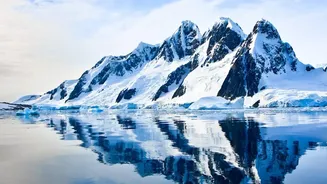
It is crucial to understand that Antarctica is not a single, uniform block of ice. Scientists distinguish between West Antarctica, the Antarctic Peninsula, and the vast, high, and cold East Antarctica. Most of the continent's dramatic ice loss in recent decades has come from the West and the Peninsula, where warmer ocean waters are melting glaciers from below, causing them to speed up and calve into the sea. East Antarctica has been considered more stable. The recent study showed that while West Antarctica continued to lose ice, the immense snowfall in the East was enough to temporarily tip the continent's overall mass balance into the positive.
Not a Reversal of Climate Change
While the news of ice gain might sound like a reprieve from climate change, scientists are clear: this is a temporary event, not a long-term reversal. The ice gain was a result of natural climate variability, an unusual but not unprecedented event. Paradoxically, the increased snowfall is linked to a warmer world; a warmer atmosphere can hold more moisture, leading to more intense precipitation. Researchers stress that the underlying trend of ice loss, driven by warming oceans, continues. A few years of lower snowfall could easily tip the balance back to a net loss for the entire continent. This event highlights the complexity of the climate system, where warming can produce surprising and sometimes counterintuitive results.
Implications for Sea-Level Rise
The Antarctic Ice Sheet holds enough frozen water to raise global sea levels by a catastrophic 58 meters. Understanding its mass balance—the difference between snow gained and ice lost—is therefore critical for predicting future sea-level rise, an issue of immense importance for India with its extensive coastline. While the 2021-2023 snow surge briefly slowed Antarctica's contribution to rising seas, it does not change the long-term projections. In fact, the study underscores the need for more nuanced climate models that can account for these complex, long-distance interactions between tropical oceans and polar ice sheets. It serves as a reminder that Antarctica's future is delicately balanced and its response to global warming is far from simple.