



What is SMOPS?
SMOPS stands for the International Conference on Spacecraft Mission Operations. It’s a major event where experts from space agencies like ISRO, NASA, and ESA, along with private companies and researchers, come together. Jointly organised by ISRO, the Astronautical
Society of India (ASI), and the International Academy of Astronautics (IAA), the conference is a crucial platform for sharing the latest breakthroughs and strategies in managing space missions. Think of it as the ultimate strategy session for the people who fly the spacecraft, ensuring everything from a satellite launch to a deep space probe's journey goes according to plan. The focus is on making mission operations smarter, more sustainable, and ready for the next generation of space exploration.
Why Bengaluru is the Perfect Host
It’s no coincidence that this premier event is happening in Bengaluru. Often called the 'Space Capital of India', the city is the heart of the country's space ecosystem. It's home to the headquarters of ISRO and its key facilities like the ISRO Telemetry, Tracking and Command Network (ISTRAC), which is responsible for monitoring and controlling satellite and launch vehicle missions. Furthermore, Bengaluru has emerged as a powerhouse for space-tech startups, attracting a significant majority of the sector's funding in India. The city's rich mix of government institutions, private innovators, and top-tier academic centres makes it the ideal melting pot for discussions on the future of space technology.
Automated Mission Control Explained
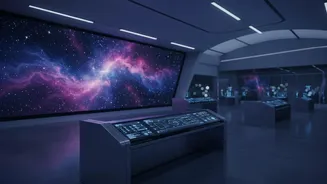
The central theme of SMOPS-2026 is automated mission control. For decades, mission control has been pictured as a room full of experts glued to their screens, manually tracking every piece of data. While human oversight remains critical, the complexity and sheer number of modern space missions demand a new approach. Automated mission control uses artificial intelligence (AI) and machine learning (ML) to handle routine tasks, analyze vast amounts of data, and even predict and flag potential problems before they become critical. It’s like upgrading from a manually driven car that requires constant attention to a highly advanced vehicle with a sophisticated driver-assist system. The system manages the basics, allowing the human driver to focus on the overall journey and unexpected hazards.
The Urgent Need for Automation
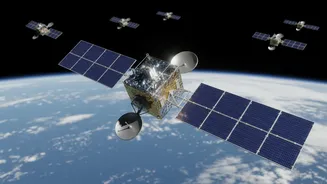
The push for automation isn't just about efficiency; it's a necessity. As we launch vast constellations of hundreds or thousands of satellites and plan more complex missions to the Moon and Mars, the old way of doing things is no longer scalable. Manually tracking every satellite in a mega-constellation is impossible. AI-driven systems can manage these complex networks, ensuring they operate without colliding and deliver their services reliably. For deep space missions, where communication delays can be minutes or hours, spacecraft need more autonomy to make their own decisions in real-time. Automation helps reduce the workload on human operators, lowers the risk of human error, and ultimately cuts down mission costs, making space more accessible.
Humans Still at the Helm
A common misconception is that automation will make human flight controllers obsolete. This couldn't be further from the truth. The goal of automation is not to replace human experts, but to empower them. By offloading routine monitoring and redundant tasks, automation frees up mission controllers to focus on higher-level problem-solving, strategic planning, and managing unforeseen anomalies—things that still require human intuition and ingenuity. Responsibility cannot be delegated to a machine. The role of the human operator evolves from a hands-on pilot to a strategic overseer, managing the system rather than being bogged down by it. This human-machine synergy is crucial for the success of future, more ambitious missions.
India's Next Leap in Space
For ISRO, embracing automated mission control is a critical step towards its ambitious future. With major projects on the horizon, including the Gaganyaan human spaceflight mission, lunar exploration, and the Aditya-L1 solar observatory, the complexity of operations is set to skyrocket. Integrating AI and automation into its ground segment is essential for managing these sophisticated missions safely and effectively. By hosting and leading discussions at SMOPS-2026, India is not just participating in the global conversation on the future of space operations; it is positioning itself at the forefront, ready to shape and lead the next era of exploration.