



A Modern Bridge Between Cultures
The relationship between Indian and French artists is not new; it's a bond with deep historical roots, tracing back to the early 20th century when Parisian art schools became a haven for Indian modernists like Amrita Sher-Gil and S.H. Raza. Today, this
connection is being formally nurtured and expanded through Villa Swagatam, a flagship Indo-French residency programme launched in 2023. Managed by the French Institute in India, it isn't a singular place but a dynamic network of nearly 30 partner institutions across both France and South Asia, including India, Bangladesh, Sri Lanka, and Bhutan. The year-long initiative provides fully-funded residencies for artists, writers, designers, and researchers to immerse themselves in a new cultural context for one to three months, facilitating a two-way flow of talent and ideas.
Beyond The 'Art-Cation'
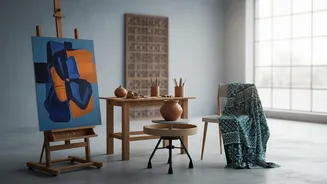
The central idea of Villa Swagatam is to move beyond superficial cultural tourism towards genuine 'cross-border creative practice'. This means artists are not just visiting; they are embedding themselves within local communities and collaborating with local artisans and thinkers. The programme is designed as a catalyst for long-term collaboration. For example, a French graphic novelist might research relationship dynamics in Bengaluru, while an Indian artist explores contemporary interpretations of embroidery with French designers. The focus is on immersive engagement, encouraging participants to draw inspiration from new environments and create work that speaks to a shared, globalised experience while being deeply rooted in a specific place. This emphasis has attracted hundreds of applicants, with over 540 vying for spots in the latest cohort.
Innovation as the Core Discussion
The 'latest discussion' surrounding the programme centres on innovation, the official theme for the India-France Year of Innovation 2026. As the programme enters its fourth edition, running from August 2026 to August 2027, the conversation has matured. Organisers and participants are focused on pushing the boundaries of collaboration. This includes fostering interdisciplinary projects, such as those mixing traditional crafts with new technologies or exploring ecological themes through art. French Ambassador to India, Thierry Mathou, has described the programme as a 'remarkable laboratory for Indo-French cultural cooperation and innovation,' where artists act as cultural transmitters or 'passeurs' who build lasting connections. This highlights a shift from simple exchange to creating a sustainable ecosystem for new and unexpected creative forms to emerge.
The Tangible Outcomes of Exchange
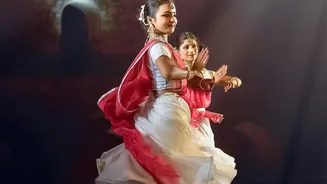
The residency's impact is visible in the diverse projects that emerge. For the 2026-2027 cycle, 35 laureates were selected. Their projects showcase the depth of the collaboration. Contemporary dancer Aishwarya Raut will develop new work inspired by Indian movement traditions at the Centre National de la Danse in France. Novelist Shubhangi Swarup will explore the shared ecological histories of the Indian Ocean during a residency in La Réunion. Meanwhile, visual artist Kaanchi Chopra will work with traditional wool practices in France, and ceramist Ayantika Sajwal will explore her craft at a contemporary art museum in Lyon. These projects demonstrate a focus on both heritage and contemporary issues, from sustainability to social engagement, ensuring the dialogue remains relevant and forward-looking.
Strengthening a Strategic Friendship
Ultimately, the discussion around Villa Swagatam is about more than just art; it's about diplomacy and soft power. Initiatives like this are a core component of the strategic partnership between India and France. By building a dense web of personal and professional relationships between their creative communities, both nations are fostering a deeper, more resilient friendship. The programme creates a shared cultural language and mutual understanding that complements diplomatic and economic ties. As artists and writers from both countries continue to collaborate, they are not only enriching their own practices but also weaving a stronger fabric of connection between France and South Asia, ensuring the relationship continues to innovate and thrive for years to come.