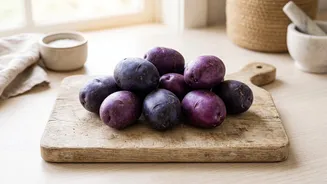







Imagine a potato that’s not just a comforting carbohydrate but a powerhouse of nutrition. Meet Kufri Jamunia, a striking purple potato making waves not for its novelty colour alone, but for what that colour signifies: a rich payload of nutrients.
An Innovation from the Hills of Shimla
Kufri
Jamunia is a homegrown agricultural marvel developed by the ICAR-Central Potato Research Institute (CPRI) in Shimla. Released in 2024, it is a 'biofortified' potato, which means it was intentionally bred to have higher levels of micronutrients. This special variety is the result of crossing two different potato lines to create a new one that naturally accumulates more vitamins and minerals. The name itself gives a clue to its most striking feature; its deep purple flesh is reminiscent of the popular 'jamun' fruit, and 'Kufri' is a nod to its origin at the research institute. It is part of a larger effort to develop more nutritious staple foods to address 'hidden hunger', where diets may be filling but lack essential nutrients.
The Science Behind the Vibrant Colour
That deep, royal purple hue isn't just for show. It comes from a high concentration of naturally occurring pigments called anthocyanins. These are the same powerful antioxidant compounds that give blueberries, blackberries, and of course, jamun their famous colours. Antioxidants are vital for our health as they help neutralise harmful free radicals in the body, which can contribute to chronic diseases and ageing. Kufri Jamunia contains a significant amount of these pigments throughout its flesh, not just in the skin. Reports indicate it has about 32-42 mg of anthocyanins per 100 grams of fresh weight, setting it apart from its paler potato cousins. This makes it a valuable addition to a diet focused on antioxidant-rich foods.
A Serious Boost of Vitamin C
Beyond its antioxidant pigments, Kufri Jamunia is a standout source of Vitamin C. While all potatoes contain this essential nutrient, this purple variety packs an extra punch. Some analyses show it contains around 42-52 mg of Vitamin C per 100 grams, which is considerably more than the amount found in many conventional potato varieties. Vitamin C is crucial for a healthy immune system, good skin health through collagen synthesis, and also acts as an antioxidant itself. The development of a staple food that is naturally high in Vitamin C is a significant step forward in improving nutritional security. The variety also contains enhanced levels of other micronutrients like iron and zinc.
From the Farm to Your Kitchen
So, what does this purple potato taste like, and how can you use it? According to researchers and initial taste tests, Kufri Jamunia has a pleasant, mealy texture and a taste that is very similar to regular potatoes, making it highly versatile. Its vibrant colour remains even after cooking, adding a visual flair to any dish. It can be used in all the ways you would use a standard potato — think colourful curries, striking parathas, baked dishes, and even mashed potatoes with a purple twist. The institute that developed it also suggests its use in making nutrient-rich flour and even traditional breakfast items like idli and upma. With a good storage life and a high yield potential for farmers, Kufri Jamunia is designed to be both a nutritious and practical crop, especially for the North Indian plains where it is recommended for cultivation.