






More Than a Touchdown
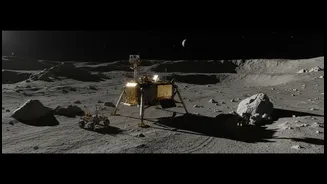
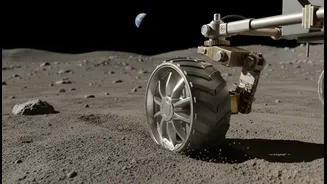
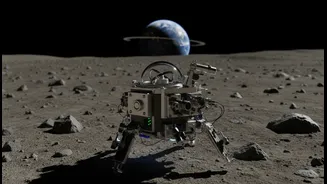
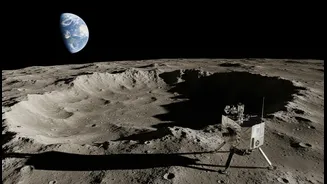
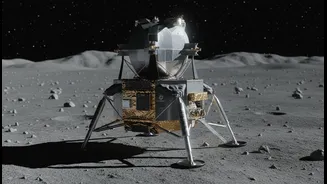
The successful landing of the Vikram lander in August 2023 was a monumental achievement for India. But it was only the beginning. The primary goal was to deploy the Pragyan rover and use a suite of on-board instruments to conduct on-the-spot scientific
analysis of a place no mission had ever touched before. For one lunar day—about 14 Earth days—the lander and rover collected invaluable data on the lunar soil, the thin atmosphere, and the seismic environment. This information is providing 'ground truth' that helps scientists worldwide calibrate their theories and data collected from orbiters, fundamentally changing our understanding of the Moon.
A Surprising Temperature Profile
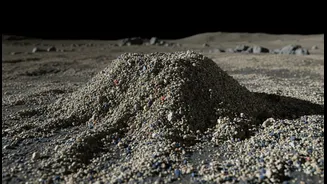
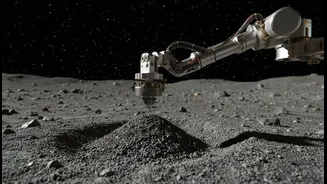
One of the mission's first major revelations came from the Chandra’s Surface Thermophysical Experiment (ChaSTE). The instrument penetrated about 10 centimetres into the lunar soil to take the first-ever direct temperature measurements of the south pole's topsoil. Scientists were surprised by the huge temperature difference—over 70 degrees Celsius—between the sun-baked surface and the soil just a few centimetres below. This finding suggests the lunar topsoil is an incredibly effective insulator. This knowledge is not just scientifically interesting; it has major implications for the search for water ice. The data suggests that stable ice could potentially exist at shallower depths and over a wider area than previously thought, not just in permanently shadowed craters.
Listening for Moonquakes
The Instrument for Lunar Seismic Activity (ILSA) was designed to listen for 'moonquakes'. For decades, the lunar poles were thought to be seismically quiet. ILSA's data challenged this, recording over 250 seismic events. While many were linked to the rover's movements, about 50 were mysterious, potentially natural tremors. This is the first seismic data from the lunar south pole and the first on the Moon since the Apollo missions. Understanding the Moon's seismic activity is crucial for designing future lunar habitats, ensuring they can withstand any potential ground vibrations, and it offers clues about the Moon's internal structure and geology.
Confirming the Chemical Code
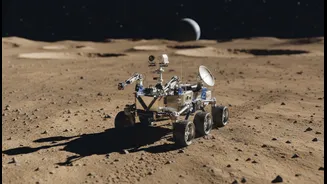
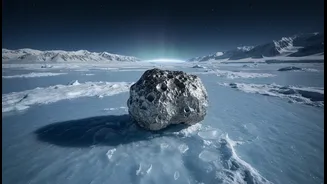
The Pragyan rover's instruments, the Laser-Induced Breakdown Spectroscope (LIBS) and the Alpha Particle X-ray Spectrometer (APXS), acted as mobile chemistry labs. For the first time, they made unambiguous, in-situ confirmation of sulphur in the lunar soil near the south pole—something orbiters couldn't definitively do. They also identified a host of other elements, including aluminum, iron, calcium, chromium, and titanium. This elemental recipe provides strong evidence for the 'Lunar Magma Ocean' hypothesis, a theory that the young Moon was once covered in molten rock. Incredibly, recent analysis has shown the soil composition at the landing site is a near-perfect match for a specific lunar meteorite, ALHA 81005, found in Antarctica, providing a direct link between a sample on Earth and its origin on the Moon.
Charging Up Lunar Knowledge
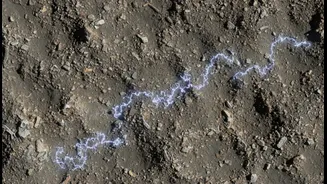
Another instrument on the Vikram lander, RAMBHA, took the first-ever direct measurements of the plasma environment just above the lunar surface at the south pole. Plasma is a sparse soup of charged particles. RAMBHA found this environment to be less dense than some models predicted during the early lunar day but also surprisingly energetic. This data is critical for understanding how the solar wind interacts with the lunar surface without the protection of a global magnetic field like Earth's. It also affects everything from how lunar dust gets electrically charged and moves around to the long-term stability of resources on the surface, which is vital information for planning future robotic and human missions.