






Why Weather is Everything
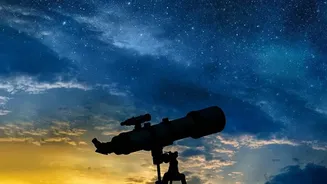
The perfect night for stargazing requires more than just the absence of clouds. Key atmospheric conditions must align to transform a clear night into a spectacular one. Low humidity is crucial; water vapour in the air can scatter starlight and reduce
clarity, making stars appear hazy. The post-monsoon period in many parts of India, from October onwards, offers a 'golden window' where the rains have washed dust and pollutants from the atmosphere, leaving behind exceptionally transparent air. Another factor is 'seeing', the term astronomers use for atmospheric stability. Cool, stable air, often found at high altitudes or during dry winter nights, means stars twinkle less and appear as sharp, steady points of light, allowing you to see finer details on planets and in distant galaxies.
The Monsoon vs. The Stargazer
India’s climate is dominated by its seasons, most notably the monsoon (roughly June to September). During these months, most of the country is blanketed in thick cloud cover, making stargazing virtually impossible. However, a few unique geographical pockets are shielded from the monsoon's full force. These 'rain shadow' regions, like Ladakh and Spiti Valley, remain arid and offer clear skies even when the rest of the subcontinent is drenched. For most other destinations, the best strategy is to wait for the monsoon to retreat. The winter months, from October to March, generally provide the most reliable weather, with long, clear, and dry nights perfect for astronomy across the plains and peninsular India.
High and Dry: Ladakh & Spiti Valley
For the most breathtaking skies, altitude is your ally. The trans-Himalayan regions of Ladakh and Spiti Valley offer some of the best stargazing conditions on Earth. Sitting at altitudes above 3,500 metres, the thin, dry air has minimal dust and moisture. Hanle in Ladakh is home to India's first official Dark Sky Reserve, a testament to its pristine skies. The best time to visit these areas is between May and October when the roads are open. While July and August can bring some peripheral monsoon clouds, June and September are often considered the prime months for the clearest views. Be prepared for cold nights, even in summer.
Desert Stars: Rajasthan and Gujarat
The vast, open deserts of western India offer a different, but equally magical, stargazing experience. The Thar Desert around Jaisalmer and the white salt flats of the Rann of Kutch provide unobstructed 360-degree horizons with very little light pollution. The key here is to visit during the winter, from October to March. During these months, the air is dry and the skies are reliably clear and crisp. A night spent at a desert camp, far from city lights, can reveal the Milky Way in all its glory. December and January offer the clearest conditions, though they are also the coldest months.
Southern Skies: The Western Ghats
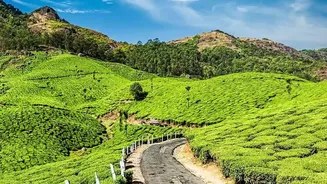
You don't have to travel to the Himalayas or a desert for a great view. The hill stations of the Western Ghats in South India offer excellent opportunities, provided you time it right. Locations like Coorg in Karnataka and the Nilgiri Hills have significantly darker skies than the nearby cities. The trick is to visit during the dry winter season, from November to February. This post-monsoon window ensures humidity is low and the skies are free of clouds. While the Milky Way's bright core is more of a summer sight, the winter skies are full of brilliant constellations like Orion.
Planning for Darkness
Beyond picking the right season and location, one final piece of timing is crucial: the lunar calendar. A bright full moon acts like a giant light in the sky, washing out fainter stars and the Milky Way. For the best experience, plan your trip around the new moon, when the sky is at its darkest. The week centred on the new moon date is the ideal window. Simple apps like Stellarium can also help you identify what you're looking at, from constellations to visible planets. Remember to let your eyes adjust to the darkness for at least 20 minutes to see the full celestial spectacle.