


What Are Brown Dwarfs?
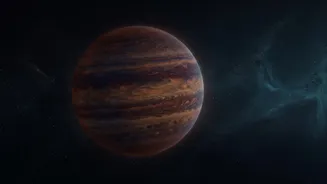
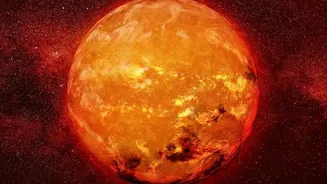
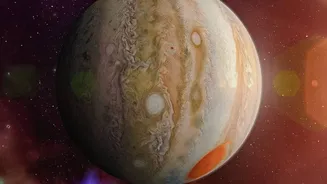
Imagine an object that forms from a collapsing cloud of gas and dust, just like a star, but never quite makes it. That’s a brown dwarf. They exist in a fascinating grey area, typically possessing between 13 and 80 times the mass of Jupiter. This is enough
mass to generate some heat and even briefly fuse a heavy form of hydrogen called deuterium, but not enough to ignite the sustained hydrogen fusion that makes a star shine brightly. Because they lack an internal engine, brown dwarfs simply cool down and fade over billions of years, making them incredibly faint and difficult to detect. For decades they were purely theoretical, but modern infrared telescopes have finally brought them out of the shadows.
NASA's New Cosmic Detective
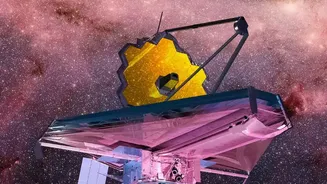
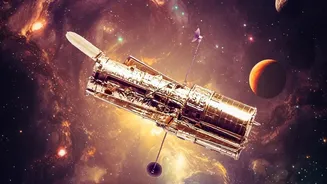
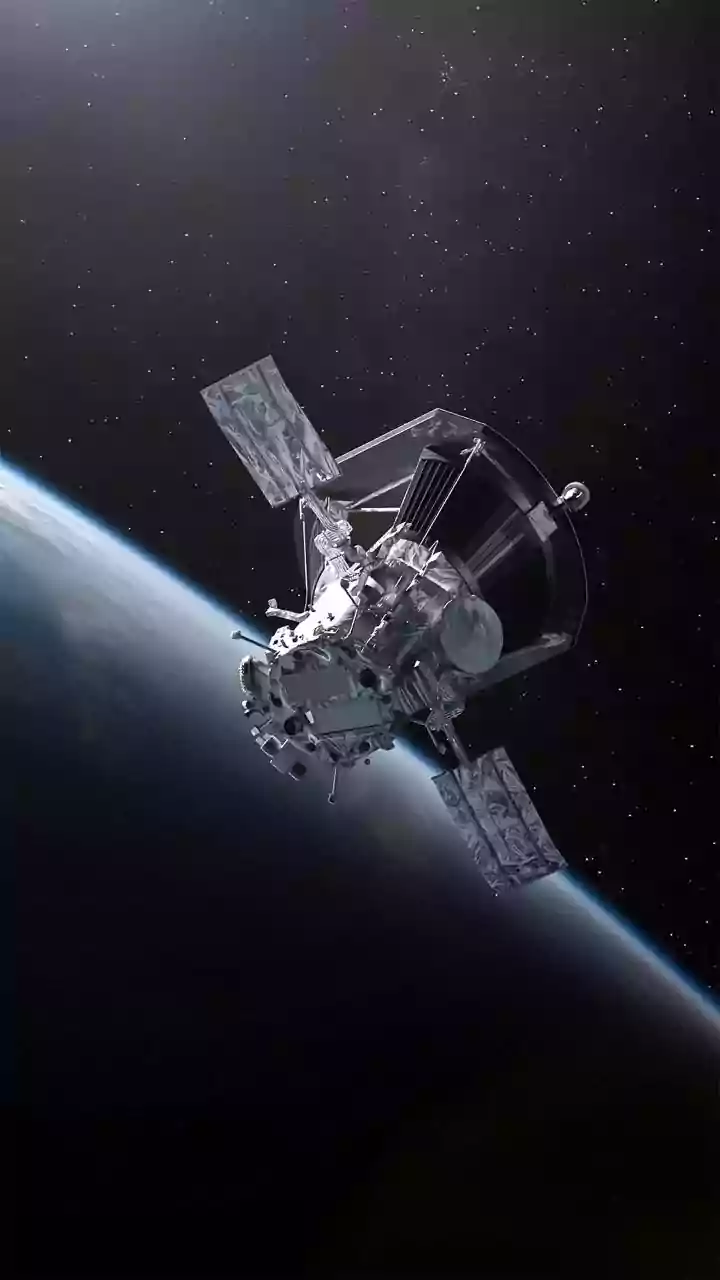
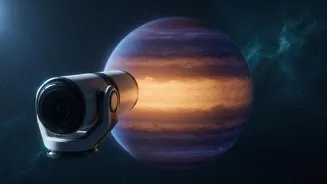
The primary tool in this new era of discovery is NASA's James Webb Space Telescope (JWST). Unlike telescopes that see visible light, Webb is designed to capture infrared light, which is essentially heat radiation. This is perfect for spotting brown dwarfs, which are too cool to glow brightly in visible light but still emit a faint warmth that Webb can detect with unprecedented sensitivity. Its ability to peer into dusty star-forming regions, where many of these objects are born, has allowed astronomers to find brown dwarfs that were previously invisible. Webb isn't just finding them; it's revolutionising our understanding of how small a 'star-like' object can be.
Reading the Chemical Fingerprints
The real breakthrough comes from analysing their 'chemical fingerprints'. This is done through a technique called spectroscopy, where the telescope's instruments spread an object's light out into a rainbow-like spectrum. Different molecules in a brown dwarf's atmosphere absorb light at specific wavelengths, leaving behind dark lines in the spectrum. These lines act as a unique barcode, revealing the presence of water, methane, carbon monoxide, and carbon dioxide. By studying these fingerprints, scientists can determine a brown dwarf's temperature, composition, and even the types of clouds in its atmosphere, providing a detailed look into these alien worlds.
Record-Breaking Discoveries
Armed with this technology, astronomers using JWST have made some startling finds. Recently, they identified the smallest free-floating brown dwarfs ever seen, with some weighing only two to three times the mass of Jupiter. This discovery challenges long-held theories about the minimum mass required to form an object through star-like processes. In another surprising twist, the telescope detected the signature of an unidentified hydrocarbon molecule in the atmospheres of the very coolest brown dwarfs, a chemical that current models cannot explain. Perhaps most intriguingly, one of these tiny objects appears to be surrounded by its own disk of gas and dust—the raw material for forming planets. This raises the mind-bending possibility of a planet forming around an object that is itself barely larger than a planet.
A Wider, Deeper Search
While JWST makes headlines with its deep dives, another NASA mission is taking a wider view. The SPHEREx telescope, which launched more recently, is in the process of creating an all-sky map, and in doing so, it is finding thousands of brown dwarfs. Recent findings from the mission confirm that these objects have chemically rich atmospheres, similar in some ways to the gas giants in our own solar system. By observing them across 102 different colours of infrared light, SPHEREx is building a massive catalogue that will help scientists understand how their atmospheric chemistry changes as they age and cool. This broad survey complements JWST's detailed studies, giving us both a panoramic and a close-up view of the brown dwarf population.