





Day 1: North Kolkata's Heritage and Artistry
Begin your Puja journey in North Kolkata, the soul of the city's heritage. Start the morning early at Kumartuli, the potters' quarter where the magnificent idols are born. Even during the festival, witnessing the workshops provides a deep appreciation
for the artistry. From there, delve into the world of 'Bonedi Bari' Pujas—celebrations in historic aristocratic homes. Priorise a visit to Sovabazar Rajbari, where the tradition of grand household Pujas began in 1757. Other notable family pujas in the area include Chatu Babu Latu Babu Bari and Darjipara Mitra Bari. In the evening, immerse yourself in the community spirit at iconic 'sarbojanin' (public) pandals like Bagbazar Sarbojanin, one of the oldest and most traditional in the city, and College Square, famous for its pandal's reflection in the adjacent pool. For transport, the Metro is your best friend; use the Sovabazar Sutanuti station as your starting point.
Day 2: South Kolkata’s Grand Themes
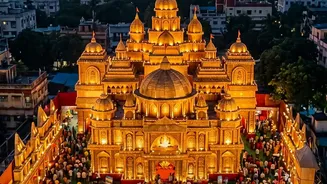
South Kolkata is famed for its big-budget, creative, and often jaw-dropping theme pandals. Dedicate your second day to this vibrant circuit. Start your exploration around the Gariahat and Ballygunge areas, home to a cluster of celebrated Pujas like Ekdalia Evergreen, known for its stunning temple replicas, and Singhi Park. Nearby, Mudiali Club and Ballygunge Cultural Association also showcase incredible artistry. In the evening, head towards the Rashbehari area to witness the massive crowds and grand designs at Tridhara Sammilani and Deshapriya Park. Another must-visit is Suruchi Sangha in New Alipore, which wins awards for its artistic representations of different Indian states. Pandal hopping here is best done in clusters to avoid traffic snarls. Use the Kalighat or Jatin Das Park Metro stations to access this part of the city.
A Culinary Interlude: Eating Your Way Through Pujo
Durga Puja is as much a feast for the stomach as it is for the eyes. Each day offers a chance to indulge. While pandal hopping, grab iconic street foods like phuchka (Kolkata's pani puri), kathi rolls, and jhalmuri. Many community pandals offer 'bhog'—food offered to the goddess, typically khichuri, labra (a mixed vegetable dish), and chutney—around midday. Don't miss out on classic Bengali snacks like fish fry, vegetable chop, and Mughlai paratha from street-side stalls, especially in the evenings. For a sit-down meal, consider legendary eateries. Try authentic Bengali cuisine at Bhojohori Manna, the famous Chelo Kebab at Peter Cat, or Kolkata-style biryani at Arsalan. On Dashami, the festival's final day, indulge in mishti (sweets) like sandesh and mishti doi.
Day 3: Rituals, Immersion, and Farewell
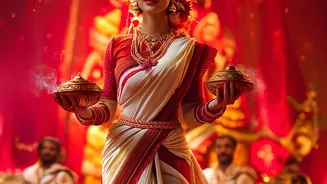
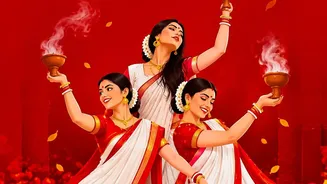
The final day, Dashami, is a bittersweet mix of celebration and farewell. In the morning, witness 'Sindoor Khela' at a local pandal, where married women smear vermilion on each other, wishing for a happy married life. The main event is the 'visarjan' or immersion of the Durga idols in the river. Head towards the ghats of the Hooghly River, such as Babughat or Prinsep Ghat, in the afternoon. You'll see processions with music and dancing accompanying the idols on their final journey, a spectacle of emotion and sound. The immersion represents the goddess returning to her heavenly abode. It's a powerful and uniquely Kolkatan experience that perfectly caps your Puja tour. For a more traditional and less crowded immersion, you could also visit one of the Bonedi Baris.
Essential Travel Tips
Navigating Kolkata during Puja requires some planning. The Kolkata Metro is the most reliable way to travel between North and South, often running special all-night services during the peak days. For shorter distances, auto-rickshaws and cycle-rickshaws are effective. Avoid relying on taxis or ride-sharing apps for pandal-hopping in the evenings, as many roads are closed to traffic. Wear comfortable shoes, as you will be walking a lot. Start pandal hopping early in the morning or very late at night (after 2 AM) to avoid the thickest crowds. Stay hydrated, keep your belongings secure, and most importantly, embrace the infectious energy of the city.