








Meet Pandora, a New Cosmic Detective
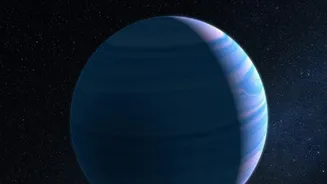
NASA’s latest effort in this cosmic quest is a small but mighty satellite named Pandora. Launched in early 2026, Pandora has now begun its primary science mission: to study the atmospheres of at least 20 known exoplanets, or planets outside our solar
system. Unlike giant observatories designed for broad surveys, Pandora is a specialist. Its job is to stare intently at these distant worlds, looking for tell-tale signs of atmospheric components like clouds, haze, and water. But its most important task is not just to find these signals, but to make sure they are real. For years, a fundamental challenge has hampered the study of exoplanet atmospheres, and Pandora was designed from the ground up to solve it. The mission represents the first satellite launched under NASA's Astrophysics Pioneers program, an initiative focused on small-scale, highly targeted science missions.
The Stellar Imposter Problem
When astronomers study a distant exoplanet, they often use the 'transit method.' They watch as the planet passes in front of its host star, causing a minuscule dip in the star's light. A tiny fraction of that starlight filters through the planet's atmosphere, carrying with it the chemical fingerprints of the gases present. The problem is that stars are not perfectly stable balls of light. They have active surfaces with dark 'starspots' and bright patches that can change over time. This stellar activity can create signals that look remarkably similar to water or other molecules in a planet's atmosphere. It’s like trying to hear a faint whisper while standing next to a crackling loudspeaker; you can’t be sure if the sound you hear is from the whisper or the speaker itself. This issue of 'stellar contamination' has been a major source of uncertainty, potentially leading scientists to misinterpret what they are seeing millions of light-years away.
A Two-for-One Observation Strategy
Pandora’s clever solution is to watch the star and the planet at the same time with two different types of light. The satellite is equipped with instruments to observe in both visible and near-infrared wavelengths simultaneously. During a planet's transit, Pandora monitors the star's brightness in visible light, which helps scientists track changes on the star's surface, like spots. At the same moment, it uses its near-infrared detector to analyze the light passing through the planet’s atmosphere, where the signatures of molecules like water are most prominent. By collecting both sets of data at once, researchers can finally disentangle the two signals. They can confidently subtract the 'noise' from the star to isolate the true atmospheric fingerprint of the planet. For its initial year-long mission, Pandora will conduct long, focused observations on each of its 20-plus targets to build a reliable dataset.
Small Satellite, Big Impact
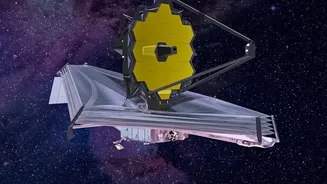
While missions like the James Webb Space Telescope (JWST) are astronomical powerhouses, they are also incredibly expensive and in high demand. Pandora represents a different, more agile strategy. As a SmallSat, it is a lower-cost mission designed to complement its larger counterparts. It tackles a very specific problem with precision, allowing bigger telescopes to use their valuable observation time more effectively. In fact, Pandora’s near-infrared detector is a spare part originally built for the Webb telescope, a perfect example of this strategic synergy. By providing clean, reliable data on which exoplanet atmospheres are worth a closer look, Pandora acts as a crucial scout. It will lay a stronger foundation for future observatories focused on the ultimate goal: finding a truly habitable world beyond our own and understanding how planets form and evolve across the galaxy.