


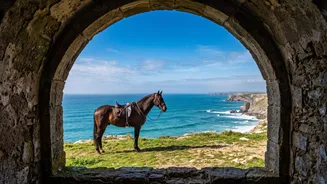
Beyond the Usual Path
When picturing Portugal, many think of Lisbon's vibrant streets or the Algarve's sun-drenched beaches. But to truly understand the soul of the country, one must venture inland. Here, across rolling plains and rugged mountains, a different kind of journey
awaits—one measured not in miles covered, but in moments of connection with a past that is still very much alive. This is slow travel, where the goal is to immerse oneself in the rhythm of a place. It's about swapping highway-driving for meandering drives down country roads, and trading crowded tourist spots for the quiet authenticity of a village where time seems to have stood still.
The Alentejo: Plains of Gold and Time
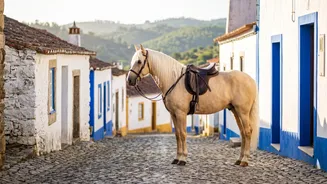
Covering nearly a third of Portugal, the Alentejo region is the embodiment of this slower pace. Its vast, sun-scorched plains are dotted with cork oak forests, ancient olive groves, and whitewashed hilltop towns that shimmer in the heat. This is a landscape shaped by millennia of history, from enigmatic Neolithic stone circles to Roman ruins and formidable Moorish castles. The region's capital, Évora, is a UNESCO World Heritage site, boasting a Roman temple and medieval walls. Yet, the true magic of the Alentejo is found in the unhurried moments: enjoying a long lunch at a local tasca, exploring the fortified town of Monsaraz, or gazing up at a star-filled sky in the Alqueva Dark Sky Reserve, the world's first 'Starlight Tourism Destination'.
The Historical Villages: A Fortified Past
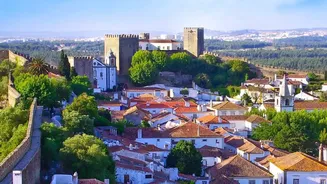
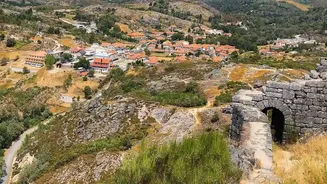
For a concentrated dose of history, the 'Aldeias Históricas de Portugal' offer an unforgettable route. This network of 12 fortified villages, mostly clustered in the Beira Interior region near the Spanish border, served as the nation's frontline defense for centuries. Each village tells a story of battles and strategic importance. In Almeida, you can walk the walls of a massive star-shaped fortress. In Monsanto, granite boulders are seamlessly integrated into the houses, creating a village that appears to have grown from the rock itself. Sortelha feels like a medieval time capsule, its castle and stone houses almost perfectly preserved. These are not museum pieces; they are living communities where you can wander cobbled streets and feel the weight of history in the air.
Walking Through History's Footsteps
To truly connect with the landscape, there is no better way than on foot. Portugal offers incredible long-distance trails that follow ancient paths. The Rota Vicentina's Historical Way is a 263-kilometre trail that winds through the inland Alentejo region, passing through cork forests, quiet valleys, and rural villages. It follows routes used for centuries by pilgrims and locals, offering an immersive journey into the country's cultural heritage. In the Beira region, the Grande Rota (GR22) is an almost 600-kilometre circular route that links all 12 of the Historical Villages, allowing ambitious hikers to literally walk from one chapter of history to the next.
The Douro Valley: A River Carved by Wine
Further north, the Douro Valley presents another version of a slow journey through history. Recognised as a UNESCO World Heritage site, its dramatic landscape is defined by steep, terraced vineyards that have been carved into the hillsides over centuries. This is the world’s oldest demarcated wine region, where Romans first cultivated grapes. The story of its famous Port wine is intertwined with the history of the region itself, from the hand-built stone terraces to the traditional 'rabelo' boats that once transported barrels down the river to Porto. Exploring a local 'quinta' (wine farm) offers a taste of this living history, where you can learn about the winemaking process that has shaped this land and its people.